
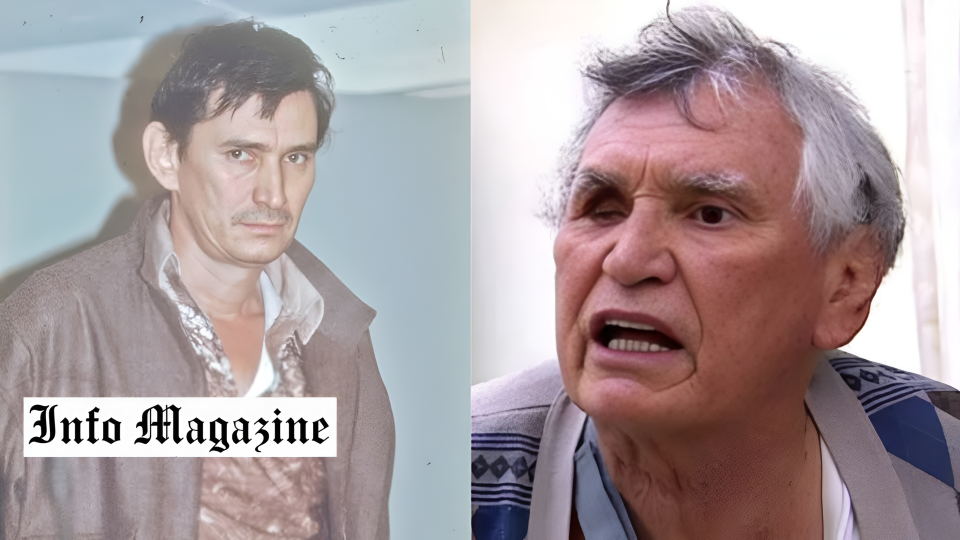
Some names become famous because the person carrying them spends decades in public view. Others become searchable for a very different reason: the name belongs to someone standing close to a much larger historical story.
Miguel Félix Murillo belongs to the second category.
His name is repeatedly connected with Miguel Ángel Félix Gallardo, the Mexican trafficker whose rise during the 1970s and 1980s became part of the history of organized crime in Mexico. Gallardo was one of the central figures associated with the Guadalajara Cartel and was later convicted in connection with drug trafficking and the murder of DEA agent Enrique “Kiki” Camarena. His story has been examined in journalism, books, documentaries, and dramatized television, most notably Narcos: Mexico.
That history explains the curiosity surrounding Miguel Félix Murillo. Yet it also creates a problem for anyone attempting to write about him. The available public record about Miguel himself is remarkably limited. Unlike his father, he does not have a substantial public career, a large archive of interviews, or a clearly documented professional identity that allows his story to be reconstructed in detail.
What can be established is more modest but still meaningful. Mexican reporting identifies Miguel Félix Murillo as a son of Miguel Ángel Félix Gallardo and María Murillo, and reports identify Abril Félix Murillo as his sister. A 2025 report from Noroeste, for example, names Miguel and Abril as children of Gallardo and his second wife, María Elvira Murillo.
That limited record changes the most useful way to approach his biography. The interesting question is not how to manufacture a dramatic career where none is documented. It is how a person can become the subject of widespread online curiosity simply because of the family history into which he was born—and how easily public fascination can blur the line between documented fact and assumption.
Quick Bio
| FactDetails | |
|---|---|
| Full Name | Miguel Félix Murillo |
| Date of Birth | No reliable public record establishes an exact date of birth |
| Place of Birth | No reliable public record establishes a specific birthplace |
| Nationality | Mexican, based on the documented Mexican family context |
| Profession | No reliably established public profession |
| Famous Role / Known For | Being identified as a son of Miguel Ángel Félix Gallardo |
| Years Active | No documented public career period established |
| Net Worth | No reliable personal net-worth figure has been established |
| Marital Status | Not reliably established in the public record |
| Spouse | No reliable public record identifies a spouse |
| Children | No reliably confirmed public information |
| Notable Works / Achievements | No independently documented public works or professional achievements established |
A Name That Leads Back to a Much Larger Story
The first thing to understand about Miguel Félix Murillo is that his public identity is largely relational.
Search his name and the same family connection appears again and again: Miguel Ángel Félix Gallardo.
That association is not a minor footnote. Gallardo became one of the most recognizable figures in the history of Mexican organized crime. His career began long before he became a household name. According to established biographical accounts, he worked in the Sinaloa state police and later served as a bodyguard for Governor Leopoldo Sánchez Celis. He subsequently became involved in drug trafficking and helped build the organization that became known as the Guadalajara Cartel.
By the 1980s, Gallardo was a major figure in Mexico’s drug trade. His network and associations connected him with figures including Rafael Caro Quintero and Ernesto Fonseca Carrillo. His eventual arrest on April 8, 1989, marked one of the major turning points in the history of that organization and in the public story of the Félix Gallardo family.
For someone born into that family, the surname itself carried an extraordinary historical weight.
But family association should not be confused with personal conduct.
There is no reliable evidence establishing Miguel Félix Murillo as a participant in his father’s criminal organization. His presence in family reporting tells us that he was part of the family surrounding Gallardo, not that he shared his father’s activities.
That distinction is particularly important when writing about relatives of notorious public figures. A person’s relationship to a criminal figure can explain why the person is searched, but it cannot automatically establish what that person did, believed, or became.
The Family Connection Is Better Documented Than His Own Career
The public record becomes clearer when it moves away from Miguel’s adult life and toward his family.
Mexican news coverage has identified him as one of the children of Miguel Ángel Félix Gallardo and María Elvira Murillo. Noroeste reported that Gallardo’s second wife was María Elvira Murillo and named Miguel Félix Murillo and Abril Félix Murillo as their children.
A family-tree record also connects Miguel with Miguel Ángel Félix Gallardo, María Elvira Murillo, and Abril Félix Murillo. Genealogical websites can be useful clues, although they should not be treated as equivalent to official civil records when establishing sensitive biographical details.
This is one reason the biography of Miguel Félix Murillo should be written cautiously.
There is enough information to establish a family relationship. There is not enough to construct an elaborate life story.
The difference may sound small, but it matters enormously in an age when search results often recycle one another. A claim can appear on several biography websites and still trace back to little more than an earlier unsourced page.
That appears to be happening with Miguel’s supposed birth date, occupation, relationship status, and financial details.
One online biography, for example, gives a precise date of birth and describes him as an artist and cultural contributor. Yet the same page acknowledges elsewhere that there is no publicly available information about his career. Those contradictions are a useful warning: precision does not automatically mean reliability.
Why His Father’s 1989 Arrest Matters
For the Félix Gallardo family, April 1989 represents a dividing line.
Miguel Ángel Félix Gallardo was arrested on April 8, 1989, in Guadalajara. His arrest followed years in which he had become a central figure in Mexican drug trafficking. The case surrounding him included allegations concerning the kidnapping and murder of DEA agent Enrique “Kiki” Camarena, along with drug-trafficking and other charges.
The event was important not only because of Gallardo’s criminal case but because it fundamentally changed the circumstances surrounding his family.
A family member’s arrest in a highly publicized international criminal case is not an ordinary biographical event. It transforms private family history into public history.
That is part of what makes the limited information about Miguel interesting. The public record does not provide a detailed account of how he personally experienced that period, and it would be irresponsible to invent one.
Some websites describe supposed emotions, family dynamics, private decisions, or later personal developments as though they were established facts. The evidence does not support that level of certainty.
What can be said is simpler: Miguel was identified in reporting as one of Gallardo’s children, and the family became connected to one of the most heavily scrutinized criminal cases in modern Mexican history.
The rest requires restraint.
Growing Up Around a Notorious Surname
There is a peculiar contradiction at the center of the Miguel Félix Murillo story.
The family name is highly recognizable, but the individual is not.
That distinction explains much of the search interest.
People often assume that the children of famous or infamous parents must themselves have public careers. In reality, family members can choose—or simply happen—to remain outside public life. They may never become entertainers, politicians, business figures, or media personalities.
In Miguel’s case, there is no well-established public record of a major career that explains his online visibility.
His visibility comes largely from historical association.
That creates a particular kind of public identity. Instead of being known for a body of work, he is known because people want to understand the family surrounding someone else.
This phenomenon is common in celebrity culture, political families, and historical biographies. A person becomes searchable because readers want to know what happened to the children, spouses, siblings, or relatives of a famous figure.
Miguel’s case is more unusual because the person at the center of the family story is not famous for entertainment or sports. His father became famous through organized crime.
That makes accuracy even more important.
There is a moral difference between documenting a family relationship and turning a relative into an extension of a criminal biography.
Miguel Félix Murillo should not be treated as a character in his father’s criminal story simply because he was born into the family.
The Narcos: Mexico Effect
Much of the modern interest in the Félix Gallardo family cannot be separated from popular culture.
Netflix’s Narcos: Mexico brought Miguel Ángel Félix Gallardo back into international conversation. The series cast Diego Luna as Gallardo and dramatized the development of the Guadalajara Cartel and the events surrounding the early modern Mexican drug trade.
Television has a powerful effect on historical curiosity.
A viewer watches a dramatized account of a real person. The viewer then searches for the real history. From there, the questions expand.
Who was the person’s wife?
What happened to his children?
Where is the family now?
Which parts of the television story were real?
Those searches can pull previously obscure relatives into the spotlight.
Miguel Félix Murillo fits naturally into that pattern.
He is not one of the principal characters of Narcos: Mexico, nor is he known for having built a public career in entertainment. His name instead belongs to the real-world family surrounding the central historical figure.
That distinction should remain clear.
A television drama can be a gateway to historical research, but it is not automatically a biographical source for every relative of the people it portrays.
For readers who want broader context, the Wikipedia entry on Miguel Ángel Félix Gallardo provides a useful starting point for understanding the father whose history explains much of the interest in Miguel.
The television version and the historical record should then be considered separately.
What the Public Record Does Not Tell Us
Sometimes the most responsible part of a biography is the list of things that cannot honestly be answered.
Miguel Félix Murillo’s exact date of birth is not reliably established by the stronger sources available. His specific birthplace is likewise not firmly documented. There is no dependable public record establishing a professional career, personal fortune, spouse, or children.
That means popular searches such as “Miguel Félix Murillo age,” “Miguel Félix Murillo net worth,” or “Miguel Félix Murillo wife” can produce an illusion of certainty.
A page may present an exact answer in a neat biography box. Another site may copy it. A third site may repeat the same information with slightly different wording.
Three pages do not necessarily equal three sources.
This is especially relevant to net-worth claims.
There is no reliable evidence supporting a specific personal net-worth figure for Miguel Félix Murillo. Estimates circulating online should therefore not be presented as fact. The wealth historically associated with his father cannot simply be transferred to Miguel as personal wealth.
The same principle applies to professional titles.
Calling someone an “artist,” “businessman,” “cultural contributor,” or another profession requires evidence. A family-tree listing does not establish a career. A biography website saying something does not make it independently verified.
For readers trying to separate established information from online invention, that caution is more useful than a fabricated number or occupation.
Miguel Félix Murillo and the Problem of Inherited Identity
There is another reason the story is worth examining.
A person’s surname can become a kind of historical label.
For Miguel Félix Murillo, the name “Félix” immediately invokes Miguel Ángel Félix Gallardo. The association is so strong that it can overshadow the individual carrying the name.
This is one of the stranger effects of notoriety.
For a famous actor’s child, a family surname may create expectations of glamour. For the child of a controversial political figure, it may create assumptions about ideology. For the child of a convicted criminal, the surname can become a source of suspicion.
None of those assumptions necessarily describe the individual.
The public record surrounding Miguel does not establish that he continued his father’s criminal activities. Nor does it establish that he built a public career specifically designed to distance himself from his father’s legacy.
Both claims would go beyond the evidence.
The safer conclusion is that his identity has remained comparatively private while his family history has remained exceptionally public.
That contrast may actually explain why people continue searching for him.
There is a natural desire to know what happened to the people left behind by major historical events. Yet the answer is sometimes that the person simply did not become a public figure.
That is not an incomplete biography. It may be the central fact of the biography.
The Difference Between Miguel and Miguel Ángel
The similarity of the names creates another source of confusion.
Miguel Ángel Félix Gallardo is the historically prominent figure. He was born in 1946 and became a leading figure in Mexican organized crime before his arrest in 1989. His story has been documented extensively.
Miguel Félix Murillo is a different person.
He should not be described using his father’s career achievements, criminal titles, or historical actions.
That sounds obvious, but online biographies can blur the distinction. Search results frequently begin with the father’s story and then move directly into a profile of the son. The result can make it seem as though the son inherited the father’s public role.
He did not.
The available evidence supports a family connection, not an equivalent career.
That distinction also matters when discussing the Guadalajara Cartel. Gallardo’s documented association with that organization is part of Mexican criminal history. It is not evidence that every member of his family belonged to it.
A surname is not a criminal record.
What Can Be Said About His Sister?
Abril Félix Murillo is another name that appears in the family record.
Mexican reporting identifies Abril as Miguel’s sister and as a daughter of Miguel Ángel Félix Gallardo and María Murillo.
Like Miguel, however, Abril has a relatively limited public biography of her own.
This matters because it shows that the lack of information surrounding Miguel is not necessarily an isolated phenomenon. The family’s public visibility has largely been generated by the notoriety of the father rather than by a public career built by the children.
A responsible profile therefore has to resist the temptation to create a family drama from fragments.
There is no reliable basis for describing the siblings’ private relationship, adult occupations, finances, residences, or personal beliefs unless stronger evidence emerges.
What is documented is enough to establish the family connection and to explain why both names appear when people research Gallardo’s relatives.
Why the Mystery Persists
The internet usually rewards certainty.
A search box asks a question and expects a short answer.
How old is Miguel Félix Murillo?
Where was he born?
Who is his wife?
How much money does he have?
What does he do?
The temptation for biography sites is to answer every question, even when the evidence is thin.
Miguel’s story demonstrates why that approach can be misleading.
Sometimes the correct answer is that the available public record does not establish the detail.
That may seem less satisfying than an exact birthday or an impressive net-worth estimate, but it is far more useful to readers who want information they can trust.
The scarcity of reliable information also creates an unusual kind of mystery. Miguel is searchable without being conventionally famous. His name appears in discussions of one of Mexico’s most notorious criminal figures, yet his own professional identity remains largely outside public documentation.
That gap between search visibility and public activity is the defining feature of his online presence.
It is also why his story should be approached differently from the biography of an actor, athlete, musician, or politician.
There is no substantial body of work to summarize.
There is instead a historical family connection to understand.
A Life That Has Not Been Publicly Written in Full
It is tempting to interpret silence.
Perhaps Miguel wanted privacy. Perhaps circumstances led him away from public attention. Perhaps he simply never had a reason to become a public figure.
But none of those explanations can be confidently established from the available record.
Silence is not evidence of a particular motive.
That is an important principle when writing about private people connected to famous families.
The absence of interviews does not prove intentional secrecy. The absence of a public career does not prove withdrawal. The lack of social-media visibility does not prove a deliberate disappearance.
All that can safely be said is that Miguel Félix Murillo does not have the kind of extensive public profile associated with his father.
In an era when nearly every recognizable name can produce a digital trail, that is unusual enough to become part of the story itself.
The result is a biography defined less by public accomplishments than by the boundary between what history records and what it does not.
The Legacy He Inherited Without Creating
Miguel Félix Murillo’s name is permanently connected to one of the most controversial chapters of modern Mexican history.
His father became a central figure in the development of the Guadalajara Cartel and was later imprisoned following a highly publicized criminal case. Gallardo’s story continued to attract attention through books, journalism, television, and renewed public interest in Mexico’s cartel history.
Miguel did not create that legacy.
He inherited its surname.
That difference is the key to understanding him.
The public may continue to search for him because people want to know what became of the family behind a notorious figure. But a serious profile should not turn that curiosity into unsupported claims.
What makes Miguel Félix Murillo interesting is therefore not a collection of sensational achievements that can be listed in a timeline. It is the unusual position he occupies between public history and private life.
His family is historically significant.
His father is extensively documented.
His own life is not.
That tension explains why his name continues to appear in searches and why reliable information is harder to find than the volume of online material might suggest.
Frequently Asked Questions About Miguel Félix Murillo
Who is Miguel Félix Murillo?
Miguel Félix Murillo is identified in Mexican reporting as a son of Miguel Ángel Félix Gallardo and María Elvira Murillo. His name is primarily known because of his family connection to Gallardo, the convicted Mexican trafficker associated with the Guadalajara Cartel.
Is Miguel Félix Murillo related to Miguel Ángel Félix Gallardo?
Yes. Mexican reporting identifies Miguel Félix Murillo as one of Miguel Ángel Félix Gallardo’s children with his second wife, María Elvira Murillo.
Who is Miguel Félix Murillo’s sister?
Abril Félix Murillo is identified in family reporting as Miguel Félix Murillo’s sister. Both are named as children of Miguel Ángel Félix Gallardo and María Murillo.
Was Miguel Félix Murillo involved in the Guadalajara Cartel?
There is no reliable evidence establishing Miguel Félix Murillo as a member or participant in the Guadalajara Cartel. His documented connection is familial. It would be inappropriate to infer criminal involvement simply from his relationship with his father.
How old is Miguel Félix Murillo?
His exact date of birth has not been reliably established in the stronger public sources available. Several websites publish precise dates, but those claims are not sufficiently corroborated to present as established fact.
What does Miguel Félix Murillo do for a living?
A reliably documented public profession has not been established. Online pages have attributed various occupations to him, but the available evidence does not provide a strong basis for treating those claims as confirmed.
What is Miguel Félix Murillo’s net worth?
There is no reliable public figure for his personal net worth. Estimates found online should not be confused with documented financial information, and his father’s historical wealth cannot simply be attributed to him.
Is Miguel Félix Murillo in Narcos: Mexico?
Miguel Félix Murillo is not one of the principal characters of Narcos: Mexico. The series focuses on figures including Miguel Ángel Félix Gallardo, played by Diego Luna, and dramatizes the history of the Guadalajara Cartel and related events.
Why Miguel Félix Murillo Still Draws Attention
There is something revealing about the way Miguel Félix Murillo’s name survives in public discussion.
It is not attached to a long list of films, companies, political offices, books, awards, or public appearances. Instead, it sits inside a family story that became famous because of one of Mexico’s most notorious historical figures.
That makes his biography unusual.
The responsible way to understand him is not to inflate the limited record into a dramatic life story. It is to recognize what the evidence actually shows: Miguel Félix Murillo is identified as a member of the Félix Gallardo family, while much of his individual life remains outside reliable public documentation.
That privacy creates the curiosity, but it should not be treated as an invitation to speculate.
In the end, his story is less about inheriting a notorious reputation than about the difficulty of separating a person from the history attached to their surname. Miguel Ángel Félix Gallardo became a figure of international notoriety; Miguel Félix Murillo appears in the record primarily as his son. Those are very different public identities.
And perhaps that distinction is the most important fact of all.
For readers interested in other profiles of people whose public identities are shaped by famous family connections, Sanaa Chappelle’s story and Janet Smollett’s family profile offer useful points of comparison. The circumstances are entirely different, but both illustrate how a person’s public identity can become intertwined with the story of a larger family.
Miguel Félix Murillo remains compelling precisely because so much of his own story has not been publicly written. The responsible biography does not erase that uncertainty. It makes the boundary between documented history and speculation visible—and leaves the private parts of his life where they belong.
For More Visits: Infomagazine
