
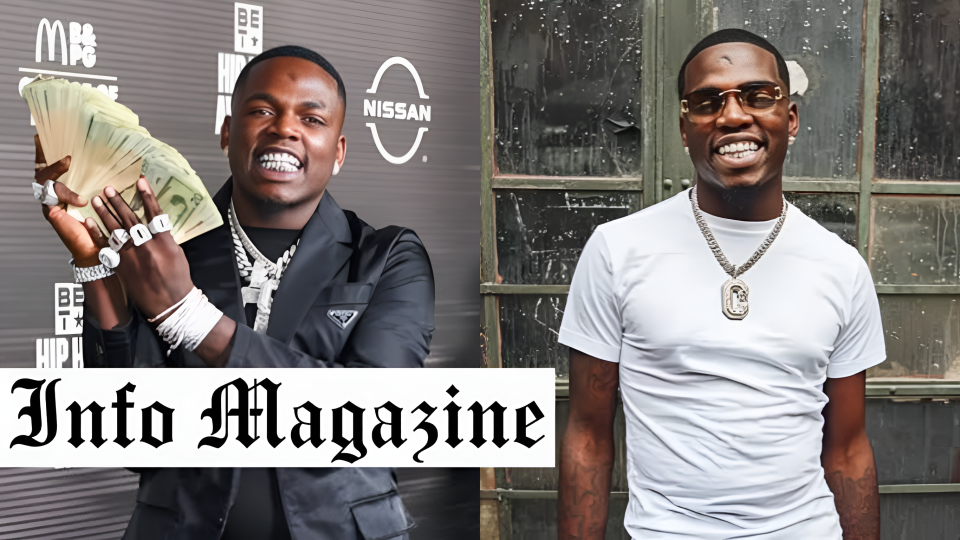
Big Boogie net worth is reasonably estimated to be between $1 million and $2 million in 2026. The Memphis-based rapper has not released verified financial statements, so no exact figure should be presented as confirmed. His estimated wealth reflects a growing music catalog, platinum-certified records, streaming royalties, YouTube views, live performances, featured verses, merchandise, and the commercial support attached to his relationship with Yo Gotti’s CMG label.
His financial journey is more significant than a single estimated number. Big Boogie did not enter music with family wealth, a ready-made entertainment network, or an expensive professional campaign. His story developed through poverty, family losses, street pressure, independent mixtapes, local performances, emotional records, and the gradual expansion of his audience.
Songs such as “Pop Out,” “Mental Healing,” “PTPOM,” “BOP,” “FWM,” and “Thuggin” helped him build a strong following. His energetic club records attract one section of the audience, while his emotionally heavy songs reveal grief, family pain, loyalty, fatherhood, and personal survival. This combination has allowed him to reach listeners who want both Southern party music and honest storytelling.
His signing with Collective Music Group gave him access to a stronger professional structure, but signing a record deal did not automatically make him wealthy. Music income is divided across labels, distributors, managers, producers, publishers, agents, and other participants. The money an artist generates is therefore different from the amount he personally owns.
Big Boogie’s financial position is best understood by examining his full career: his Louisiana beginnings, Memphis upbringing, independent work, CMG deal, popular songs, album releases, touring activity, social audience, business expenses, and future earning potential.
Big Boogie Quick Bio
| Fact | Details |
|---|---|
| Full Name | John Lotts |
| Professional Name | Big Boogie |
| Date of Birth | November 4, 1996, according to the most widely reported public profile |
| Age | 29 years old as of July 2026 |
| Place of Birth | Louisiana, widely associated with Tallulah |
| Hometown | Raised in Memphis, Tennessee |
| Nationality | American |
| Profession | Rapper, songwriter, recording artist, and live performer |
| Famous For | “Pop Out,” “BOP,” “Mental Healing,” “PTPOM,” “FWM,” and “Thuggin” |
| Years Active | 2017–present |
| Record Label | CMG The Label |
| Estimated Net Worth | Approximately $1 million–$2 million |
| Main Income Sources | Music royalties, YouTube, touring, appearances, features, merchandise, and publishing |
| Marital Status | No publicly announced marriage |
| Partner | His current relationship status is kept outside most official promotion |
| Children | One publicly known daughter |
| Major Projects | Definition of Pain, Final Nightmare, Underrated, Definition of Big Dude, REDRUM Wizard, and Pain on Paper 4 |
| Notable Achievements | Platinum-certified songs, major streaming growth, CMG signing, national touring, and a large digital audience |
Big Boogie is widely identified as John Lotts, a Louisiana-born artist who was raised in Memphis. His exact birthday has been reported differently by some databases, but November 4, 1996, is the date most commonly attached to his biography. His background as a Louisiana-born, Memphis-raised performer is consistently reflected in professional artist profiles and interviews.
What Is Big Boogie’s Net Worth in 2026?
Big Boogie’s estimated net worth in 2026 is approximately $1 million to $2 million.
This range is more responsible than claiming one precise number because his financial records are private. The public can observe his music performance, major releases, certifications, concerts, videos, social following, and label relationship, but those details do not reveal his complete balance sheet.
His actual net worth would depend on the difference between everything he owns and everything he owes.
Potential assets may include:
- Cash and savings
- Music royalty income
- Publishing rights
- Personal property
- Vehicles
- Jewelry
- Business interests
- Merchandise revenue
- Investments
- Real-estate equity
- The long-term value of his music catalog
Possible liabilities and expenses may include taxes, management commissions, recording costs, loans, property expenses, touring overhead, security, travel, family support, and business obligations.
The $1 million to $2 million estimate reflects his current position as a successful regional-to-national rapper with platinum records and strong audience demand, but not yet an artist with decades of arena touring, extensive catalog ownership, major corporate investments, or publicly documented real-estate holdings.
Big Boogie Net Worth Snapshot
| Financial Area | Estimated Position |
| Estimated Net Worth | $1 million–$2 million |
| Primary Career | Rap music |
| Major Label Connection | CMG The Label |
| Breakthrough Income Drivers | “Pop Out,” “Mental Healing,” “PTPOM,” and touring |
| Major Recent Record | “BOP” featuring GloRilla |
| Digital Income | Streaming and YouTube advertising |
| Live Income | Concerts, club appearances, festivals, and private bookings |
| Additional Income | Features, merchandise, publishing, and promotional work |
| Largest Career Asset | Music catalog and audience loyalty |
| Biggest Financial Limitation | Industry revenue splits and high career expenses |
| Future Wealth Potential | Strong if touring, certifications, and catalog ownership continue growing |
Why Big Boogie’s Exact Wealth Is Unknown
Celebrity net-worth pages often publish precise numbers even when they do not have access to contracts, tax filings, investment accounts, or property records. That creates a false impression that an artist’s finances can be calculated from music-video views alone.
Big Boogie is not required to release a public financial disclosure. He is a private recording artist rather than a government official or publicly traded company executive. His label may announce achievements, but it does not publish the percentage he receives from each stream, album, concert, or merchandise sale.
Several unknown factors make an exact calculation impossible.
His Record Contract Is Private
The terms of Big Boogie’s CMG agreement have not been released in full. A music contract may include an advance, recording budget, marketing support, royalty percentage, distribution arrangement, project commitment, and recoupment requirements.
An advance is commonly misunderstood as free income. In many record deals, an advance is paid against future royalties. The artist may not receive additional recording income until the label recovers agreed expenses.
Song Ownership Is Not Fully Disclosed
A successful song may involve several writers, producers, publishers, performers, labels, and distributors. Each participant may receive a portion of the money.
Big Boogie may earn different percentages on different songs depending on his writing credit, master ownership, guest agreements, and contractual structure.
Touring Revenue Is Not Personal Profit
A concert may generate substantial ticket revenue, but the artist does not necessarily keep the full amount.
Tour-related costs can include:
- Booking-agent commission
- Management commission
- Transportation
- Flights and hotels
- Security
- DJs and supporting performers
- Production staff
- Wardrobe
- Venue expenses
- Insurance
- Promotion
- Taxes
A performer can generate strong gross revenue while retaining a much smaller net amount.
Public Lifestyle Does Not Reveal Private Wealth
Jewelry, designer clothing, luxury vehicles, and cash shown in music videos may be personally owned, financed, borrowed, rented, or supplied as part of a production.
Visual success is part of hip-hop branding, but it cannot be used as a complete accounting record.
From Louisiana to Memphis
Big Boogie was born in Louisiana and moved to Memphis while young. This combination shaped both his identity and his sound.
Louisiana gave him early family and cultural roots, while Memphis became the city where he developed his music career. His mother reportedly moved the family from Louisiana to Tennessee, placing him inside an environment with its own powerful rap traditions.
Memphis rap is known for heavy drums, dark production, direct street narratives, emotional urgency, and distinct regional language. Big Boogie’s music fits within that history while adding a more openly emotional approach.
He can make a loud, energetic record intended for parties and live audiences, then release a song centered on grief, mental pressure, betrayal, or family loss. That flexibility became one of his strongest commercial advantages.
Listeners do not follow him only for one mood. His catalog can support clubs, street playlists, personal reflection, workouts, car listening, and emotionally difficult moments.
Poverty, Pain, and the Beginning of His Financial Story
Big Boogie’s wealth story cannot be understood without looking at the conditions that existed before his success.
He has described growing up around poverty and instability. Money was not originally connected to comfort or status; it represented survival, protection, and the possibility of changing his family’s circumstances.
This background explains why financial themes appear so regularly in his music. When he discusses money, the subject is often connected to hardship, loyalty, hunger, loss, or the fear of returning to an unstable life.
Artists who come from financial insecurity may approach success differently from those who enter entertainment with stable family resources. Early income may be used to support relatives, improve housing, purchase transportation, repay obligations, or establish visible proof that life has changed.
These responsibilities can slow the accumulation of personal net worth even when gross earnings become substantial.
Big Boogie’s success therefore should not be judged only through luxury purchases. His ability to support himself, raise his daughter, maintain a professional team, finance a career, and move beyond poverty is part of the financial transformation.
Definition of Pain and His Independent Foundation
Big Boogie released Definition of Pain in 2017, establishing the emotional direction that would continue throughout his career.
The project title was important. Rather than presenting himself only as an aggressive street rapper, he positioned pain as a central part of his identity.
His early recordings helped him build local credibility before the support of a major Memphis label. They also created the foundation of a music catalog that could continue generating attention after newer songs were released.
Independent releases can be financially important because an artist may maintain greater control over the music. However, independent artists must also carry the cost of recording, videos, promotion, distribution, artwork, and performance development.
At this stage, Big Boogie was building career value rather than collecting major wealth. His most important assets were his voice, story, growing audience, and ability to turn difficult experiences into memorable songs.
How “Mental Healing” Expanded His Audience
“Mental Healing” became one of Big Boogie’s defining emotional records.
The song helped listeners understand that his music was not based solely on toughness. He could discuss internal pain without abandoning the confidence expected within street rap.
That quality created a deeper relationship with fans. Party records may generate immediate energy, but emotionally meaningful songs often produce long-term loyalty.
A listener who sees personal experience reflected in a song is more likely to return to the artist, attend concerts, share the music, follow future releases, and explore older projects.
This type of audience connection has financial value. It strengthens catalog streams and gives the artist more stability than relying on one viral trend.
Apple Music’s artist profile identifies “Mental Healing” as a major record from the Final Nightmare period and notes that its cross-platform performance helped establish Big Boogie as an artist to watch.
Signing With Yo Gotti’s CMG
Big Boogie signed with Yo Gotti’s CMG label in 2020.
The deal represented a major career transition. Yo Gotti had already built a respected position in Memphis rap and developed a label roster that included artists capable of reaching national audiences.
CMG could provide Big Boogie with several advantages:
- Professional distribution
- Recording resources
- Marketing support
- Industry relationships
- Collaboration opportunities
- Playlist access
- Tour infrastructure
- Media exposure
- Stronger visual production
- Association with an established brand
The signing did not mean that Boogie stopped needing to build his own audience. Labels invest more heavily when an artist demonstrates demand. His emotional style, live energy, and existing fan connection made him valuable before the deal.
The strongest benefit was scale. CMG could take a movement that was already developing and introduce it to more listeners.
Big Boogie’s signing was officially reflected in late 2020, following the growth of Final Nightmare and “Mental Healing.”
What a CMG Deal Means for Big Boogie’s Net Worth
A strong label relationship can increase an artist’s earning potential, but it does not guarantee immediate wealth.
The label may invest in videos, recording, marketing, staff, travel, promotion, playlist strategy, and collaborations. These resources can help music reach a larger audience.
In exchange, the label may control or share revenue from master recordings and other commercial areas. The exact structure depends on the agreement.
The CMG connection strengthens Big Boogie’s estimated net worth in several ways.
First, it increases the value of his public brand. A CMG artist can benefit from the label’s reputation and audience.
Second, it creates collaboration opportunities with artists such as Yo Gotti, Moneybagg Yo, GloRilla, 42 Dugg, and other performers connected to the company.
Third, it provides infrastructure for consistent releases and national touring.
Fourth, it gives his music a better chance of receiving professional promotion and long-term catalog management.
The financial value is therefore larger than one advance check. The deal helped create a system around his talent.
Underrated and the “Pop Out” Breakthrough
Underrated became a significant step in Big Boogie’s growth.
The project’s title reflected how he viewed his position. He had a loyal following and a recognizable sound but believed his national recognition had not yet matched his talent or audience response.
“Pop Out” became one of the most important records from this period. Its energy made it suitable for social videos, parties, concerts, and audience participation.
The song eventually reached platinum status, showing that it had developed beyond temporary local popularity. Reporting connected to his 2025 album campaign stated that both “Pop Out” and “BOP” had achieved RIAA platinum certification.
A platinum record can improve earning power in several ways. It strengthens performance demand, gives the artist proof of commercial success, supports negotiations, increases catalog visibility, and attracts new listeners to older material.
It does not mean the artist personally receives a million dollars. Certification measures units generated through sales and streaming equivalents rather than personal income.
Definition of Big Dude and a More Confident Era
Big Boogie released Definition of Big Dude in 2023.
The project represented a shift from the emotional heaviness associated with Definition of Pain. He remained capable of discussing struggle, but he also had more success to celebrate.
The project allowed him to present confidence, humor, attraction, money, lifestyle, and public recognition without abandoning his emotional identity.
An iHeart profile described it as his sixth project and emphasized the contrast between his early pain-centered work and the more successful position represented by Definition of Big Dude.
Financially, this period mattered because Big Boogie was no longer marketing himself only as a promising newcomer. He had a deeper catalog, a label platform, recognizable records, and an audience willing to attend performances.
Each project increased the number of songs capable of generating streams, performance royalties, publishing revenue, and live-show demand.
REDRUM Wizard and the DJ Drama Partnership
Big Boogie released REDRUM Wizard (Gangsta Grillz) with DJ Drama in February 2024.
The project contained 18 songs and connected Big Boogie to the respected Gangsta Grillz mixtape tradition. It included songs aimed at several parts of his audience, including emotionally reflective material and louder records designed for clubs and concerts.
Working with DJ Drama added cultural value to the project. The partnership placed Big Boogie within a mixtape series associated with numerous important hip-hop careers.
The project also included “BOP” featuring GloRilla, which became one of Big Boogie’s largest visual and commercial releases.
The official “BOP” video passed 70 million views on YouTube, significantly increasing his exposure beyond his existing audience.
A video with that level of attention can generate income through advertising, but the total is divided according to channel ownership, label agreements, platform rates, territories, and rights arrangements. Its greater value may be the attention it brings to concerts, streaming profiles, and the rest of the catalog.
Why the GloRilla Collaboration Was Financially Important
GloRilla brought a large audience and strong Memphis identity to “BOP.”
The collaboration felt natural because both artists are connected to the same regional scene and broader CMG structure. It did not appear like a random feature purchased only for commercial attention.
For Big Boogie, the song created several benefits.
It introduced him to listeners who followed GloRilla but had not explored his catalog. It increased music-video performance, strengthened his position within club-oriented Southern rap, and gave him a major collaboration suitable for awards-show and concert performance.
“BOP” later joined “Pop Out” as a platinum-certified Big Boogie record.
Successful collaborations can continue producing value long after their release. New fans may discover the song through playlists, social videos, live performances, or the collaborator’s catalog.
Pain on Paper 4 and His 2025 Career Expansion
Big Boogie released Pain on Paper 4 on October 31, 2025.
The 15-track project included contributions from DJ Drama, Lil Jon, YKNIECE, Anthony Q, 187 Crash, Zillionaire Doe, and others. Songs connected to the album included “Take Her Down,” “Toot It Up,” “2025,” “Back Da F**k Up,” and “Show Out.”
The project brought him back to the “Pain on Paper” identity while showing the growth that had occurred since the earlier installments.
Pain remained part of the story, but the production, features, audience, and commercial structure had become larger.
The album was followed by a 2026 Pain on Paper Tour, demonstrating that the project was being used not only as streaming content but also as the foundation for live revenue.
This album-tour combination is important for net worth. Recorded music creates awareness, while touring allows artists to monetize demand more directly through tickets, guarantees, VIP packages, merchandise, and increased local streaming activity.
How Big Boogie Makes Money
Big Boogie’s income is likely spread across several music-related channels rather than coming from one salary.
Streaming Royalties
Spotify, Apple Music, YouTube Music, Amazon Music, and other platforms pay rights holders when listeners play songs.
The amount received per stream is not fixed. It varies according to platform, country, subscription type, rights ownership, and contractual splits.
Big Boogie’s catalog contains numerous tracks with millions of plays. His older songs can continue earning alongside new releases, creating a growing catalog effect.
Streaming is particularly valuable because it operates continuously. A concert happens once, while a song can be played repeatedly for years.
However, streaming figures should not be multiplied by one estimated rate and treated as his personal earnings. The revenue may be divided among labels, publishers, producers, songwriters, distributors, and collaborators.
YouTube Advertising
Big Boogie’s official videos generate advertising revenue and promote his music to a visual audience.
The “BOP” video’s performance is the clearest example of the platform’s importance, but other videos also contribute through ongoing views. His official channel features music from several career stages, including newer Pain on Paper 4 releases.
YouTube income depends on advertising demand, viewer location, watch time, content ownership, and monetization arrangements.
The platform also creates indirect income. A viewer may discover a song through YouTube and later stream it elsewhere, attend a concert, follow the artist, or purchase merchandise.
Concerts and Touring
Live performance may be one of Big Boogie’s strongest sources of direct income.
His music works well in concert settings because many songs contain energetic hooks, recognizable phrases, and rhythms that encourage movement.
Live income can come from:
- Headline concerts
- Tour guarantees
- Club appearances
- Festival bookings
- College shows
- Private events
- Supporting slots
- Meet-and-greet packages
- Merchandise sold at venues
Exact booking fees are not publicly fixed. Professional booking services require clients to request a quote because pricing changes according to venue size, date, travel, location, event type, and current demand.
Featured Verses
Big Boogie can earn money by appearing on another artist’s song.
Feature arrangements vary. An artist may receive a flat fee, royalty participation, a reciprocal collaboration, or a mixture of compensation.
A strong feature also has promotional value. It introduces Big Boogie to another performer’s audience and keeps his voice active between major solo releases.
Publishing and Songwriting
When Big Boogie receives songwriting credit, he may earn publishing royalties.
Publishing income can arise when a song is streamed, sold, broadcast, performed publicly, or licensed.
Songwriting rights can become one of an artist’s most valuable long-term assets. A recording may decline in immediate popularity, but publishing can continue generating money whenever the composition is used.
The amount Big Boogie personally controls depends on his publishing agreements and writing splits.
Merchandise
Merchandise gives fans a way to support the artist while participating in his identity.
Products may include:
- T-shirts
- Hoodies
- Hats
- Posters
- Limited-edition products
- Tour merchandise
- Accessories
- Signed items
Merchandise can offer stronger profit margins than streaming when production and distribution are managed efficiently.
Big Boogie’s “Big Dude,” “Wizard,” CMG, and pain-centered branding provide several concepts that can be developed into products.
Social Media and Promotional Value
Big Boogie maintains a large social audience, giving him an independent promotional channel.
A large following can create value through sponsored content, partnerships, event promotion, song marketing, and merchandise launches. His Instagram profile had reached roughly one million followers by 2026, reflecting a sizeable direct audience.
Social influence does not automatically mean every post produces income. Its larger value is the ability to reach fans without depending completely on traditional advertising.
How Much Money Could Streaming Generate?
It is impossible to calculate Big Boogie’s personal streaming income from public play counts alone.
Suppose a catalog generates hundreds of millions of combined streams. The total revenue paid to all rights holders could be substantial, but Big Boogie’s portion would depend on several questions:
Does he own the master recording?
What royalty rate appears in his contract?
Has his advance been recouped?
How many collaborators share the song?
Who owns the publishing?
What percentage belongs to the producer?
Which platforms generated the streams?
Which countries produced the plays?
Without these answers, claiming that he earned a specific amount from streaming would be misleading.
What can be concluded is that his catalog has meaningful value. Reporting around the 2026 tour campaign described Underrated as having generated more than 200 million streams, while “Pop Out” and “BOP” had reached platinum status.
Those achievements support the conclusion that music royalties are a real part of his financial position.
The Difference Between Revenue and Net Worth
Revenue is the money generated before all costs and obligations are considered.
Net worth is the value of assets after liabilities are subtracted.
A rapper could generate $1 million in career revenue without possessing a $1 million net worth. Recording costs, commissions, taxes, travel, family responsibilities, lifestyle purchases, and label recoupment can reduce the amount retained.
The difference is especially important in music because artists operate like small businesses.
A professional rapper may need to pay or support:
- A manager
- A booking agent
- A business manager
- A lawyer
- A publicist
- A DJ
- Security
- Videographers
- Photographers
- Producers
- Engineers
- Stylists
- Drivers
- Tour staff
The artist’s career may look successful because the business generates money, while much of that money is being reinvested into maintaining momentum.
Jewelry, Fashion, and Big Boogie’s Public Image
Big Boogie regularly appears in diamond chains, watches, rings, designer clothing, and custom pieces.
Jewelry has several roles within his public image. It represents achievement, connects him to hip-hop tradition, makes visual content memorable, and reinforces the transformation from poverty to success.
However, jewelry should not be treated as a reliable measure of wealth.
A piece may be purchased outright, financed, gifted, borrowed for a shoot, or supplied through a promotional relationship. Even personally owned jewelry may have a resale value significantly below its retail price.
The same principle applies to designer clothing. Expensive fashion can strengthen branding without revealing the full financial position behind the image.
Big Boogie’s most valuable assets may not be the items visible in photographs. His catalog, name recognition, audience, performance demand, and relationship with a strong label can carry greater long-term value.
Cars and Lifestyle Spending
Vehicles frequently appear in rap content because they communicate movement, status, freedom, and financial progress.
Big Boogie has appeared around luxury and high-performance vehicles, but a responsible net-worth analysis should not assign ownership based on a video or photograph.
Music-video cars are often rented. Artists may also lease or finance personal vehicles rather than purchasing them in cash.
Even when a car is fully owned, it generally loses value over time. It may support branding, but it is not necessarily a strong wealth-building asset.
A sustainable financial position depends more on savings, investments, intellectual property, businesses, and appreciating assets than visible spending.
Big Boogie as a Father
Big Boogie has one publicly known daughter, and fatherhood has become an important part of his motivation.
He has discussed how becoming a father increased the pressure to work, build stability, and remain focused on his career. His daughter has also appeared in personal interview content, giving audiences a view of the person behind the performance identity.
Fatherhood affects net worth in two directions.
It creates additional expenses, including housing, education, healthcare, childcare, clothing, travel, and long-term support.
It can also strengthen financial discipline. An artist may begin thinking more seriously about savings, insurance, property, catalog ownership, and income that will continue beyond the most active years of touring.
Big Boogie’s daughter therefore belongs in his financial story not as a celebrity detail but as part of the motivation behind his work.
Personal Loss and the Cost of Success
Big Boogie’s music repeatedly returns to death, grief, loyalty, trauma, and the people he has lost.
Success does not remove those experiences. In some cases, financial growth creates additional responsibility because the artist becomes the person expected to support relatives and friends.
This pressure is common among performers who come from economically difficult environments. They may be building personal wealth while also helping a wider group of people.
Such support does not appear in public net-worth calculations. A website may count streams and jewelry while ignoring the financial obligations created by family and community.
Big Boogie’s emotional records suggest that his wealth should be understood in relation to loss. Money provides opportunities, but it does not replace the people who influenced his story.
Big Boogie Compared With Other CMG Artists
Big Boogie belongs to a label roster containing artists at several financial and commercial levels.
Yo Gotti has decades of music and business experience. Moneybagg Yo has released major charting albums and built a large touring audience. GloRilla experienced a rapid national breakthrough with major chart records and award recognition.
Big Boogie’s position is different. He has achieved meaningful certifications and strong regional-to-national demand, but his wealth is likely below the level of artists with longer careers, larger album sales, major endorsement agreements, or substantial business portfolios.
This does not make his financial progress insignificant. His career appears to be in an expansion stage rather than a completed stage.
A useful comparison can also be made with younger artists outside CMG. Hunxho’s age and rise in modern rap show how a strong regional audience can develop into broader visibility through consistent music and touring.
Big Boogie and the Value of Memphis Identity
Memphis is not merely the city listed in Big Boogie’s biography. It is part of his commercial identity.
The city has produced influential rap sounds, artists, producers, labels, and business structures. Listeners expect Memphis artists to bring direct language, heavy production, memorable personalities, and authentic regional energy.
Big Boogie benefits from that cultural recognition, but he also adds something distinctive. His willingness to discuss pain openly gives him a lane that is different from purely aggressive or club-focused rappers.
Regional identity can strengthen an artist’s income because it creates a loyal home market. A strong local audience can support concerts, streaming, radio, collaborations, and word-of-mouth promotion before national media becomes involved.
Memphis also gives Big Boogie access to a network that includes artists, producers, clubs, promoters, DJs, and the CMG organization.
Why Big Boogie Is More Than a Viral Rapper
A viral rapper may become known through one song and disappear when the trend ends.
Big Boogie’s career has lasted because he built several different forms of audience connection.
He has emotional songs, energetic songs, collaborative records, solo projects, mixtape history, a recognizable voice, a visible personality, and a strong regional identity.
His catalog stretches back years before “BOP.” Fans who discover him through one newer record can move backward into Underrated, Final Nightmare, Definition of Pain, and the “Pain on Paper” series.
This catalog depth supports net worth because it gives listeners more material to stream and gives promoters more songs for a complete concert.
It also reduces dependence on one hit.
Internal Link: Another Music Net-Worth Journey
The financial path of a developing artist differs greatly from that of an established superstar. Colin Stough’s net worth and music income provide another example of how streaming, touring, merchandise, label support, and audience growth work together.
Colin Stough and Big Boogie perform in different genres, but both demonstrate the same financial principle: visibility creates an opportunity, while catalog growth and live demand determine whether that opportunity becomes long-term wealth.
Expenses That Could Reduce Big Boogie’s Wealth
Big Boogie’s visible success should be balanced against the cost of maintaining a professional music career.
Recording Expenses
Studio time, production, mixing, mastering, engineering, and featured artists can require significant investment.
Music Videos
A professional video may involve directors, editors, camera crews, lighting, locations, vehicles, models, wardrobe, security, and post-production.
Touring
Transportation, hotels, staff, equipment, security, and commissions reduce gross concert income.
Taxes
Artists may owe federal, state, payroll, and business taxes. Independent contractors also need to manage estimated tax payments carefully.
Management and Agency Fees
Managers and booking agents usually earn percentages of the income they help generate.
Family Responsibilities
Supporting children and relatives can meaningfully affect the amount available for saving and investing.
Image and Branding
Jewelry, fashion, photography, social content, and event appearances can function as business expenses but still require cash.
Legal and Professional Services
Lawyers, accountants, business managers, and insurance providers are necessary for protecting a growing career.
These expenses explain why even a successful rapper may have a lower net worth than fans expect.
Could Big Boogie’s Net Worth Be Higher?
It is possible that Big Boogie’s net worth exceeds the estimated range.
Public information does not reveal whether he owns valuable property, controls a large share of his music, holds private investments, or operates businesses outside recording.
The range could also be too high if he carries significant debt, has an unfavorable royalty structure, or reinvests most of his earnings into career expenses.
This uncertainty is why a range is more credible than a single figure.
The safest conclusion is that Big Boogie has reached millionaire-level career value and likely possesses a seven-figure financial position, but his exact personal wealth remains private.
Factors That Could Increase His Future Net Worth
More Platinum and Gold Records
Certifications can increase catalog visibility, performance demand, and negotiating power.
Larger Headline Tours
Moving into larger venues could substantially increase live revenue.
Greater Ownership
Controlling masters, publishing, or merchandise infrastructure would allow him to retain a larger share of income.
Brand Partnerships
Authentic partnerships with clothing, beverage, automotive, jewelry, or lifestyle brands could add a high-margin revenue stream.
Real-Estate Investment
Property ownership could turn music income into longer-term equity.
Business Ventures
A label imprint, clothing brand, production company, or entertainment business could reduce dependence on performance income.
Catalog Longevity
If “Pop Out,” “BOP,” “Mental Healing,” and other records continue streaming for years, they can produce income beyond the original release cycle.
International Growth
A stronger audience outside the United States could increase touring and streaming revenue.
Risks That Could Limit His Financial Growth
Music careers contain several risks.
Audience attention can change quickly. A label relationship may not remain the same forever. Tours can be expensive. Public controversies can affect partnerships and bookings. Health or legal problems can interrupt work.
A rapidly changing lifestyle can also consume income before it becomes long-term wealth.
The most successful artists usually convert temporary popularity into assets that remain valuable after touring slows. Big Boogie’s future financial strength will depend partly on how much ownership, savings, property, and business infrastructure he builds around his current momentum.
Common Misconceptions About Big Boogie Net Worth
Misconception 1: Platinum Records Mean He Received Millions in Cash
A platinum certification measures consumption units. It does not reveal how much money Big Boogie personally retained.
Misconception 2: Every YouTube View Pays Him Directly
YouTube revenue may be shared with labels, distributors, publishers, collaborators, and rights holders.
Misconception 3: His Jewelry Reveals His Exact Wealth
Jewelry is part of his public image, but it cannot provide a complete financial calculation.
Misconception 4: CMG Owns Every Part of His Career
The exact contract is private. It is not responsible to claim complete ownership or independence without seeing the agreement.
Misconception 5: A Record Deal Creates Instant Wealth
A deal provides resources and opportunities, but artists may need to recoup advances and expenses before receiving significant royalties.
Misconception 6: Streaming Is His Only Income Source
Concerts, appearances, features, merchandise, publishing, YouTube, and promotional opportunities can all contribute.
Misconception 7: Net Worth and Annual Income Are the Same
Annual income measures earnings during a period. Net worth measures assets minus liabilities.
Why Fans Search for Big Boogie Net Worth
Big Boogie’s financial story attracts attention because his career contains a dramatic contrast.
He moved from poverty and personal pain into a world of platinum records, major collaborations, designer clothing, jewelry, touring, and label support.
Fans naturally want to know whether that visible success has made him a millionaire.
They also search because Big Boogie’s personality feels accessible. His emotional music allows listeners to feel connected to the person rather than only the public image.
Common searches include:
- Big Boogie net worth
- Big Boogie real name
- Big Boogie age
- Big Boogie daughter
- Big Boogie girlfriend
- Big Boogie songs
- Big Boogie CMG deal
- Big Boogie booking price
- Big Boogie hometown
- Big Boogie albums
These searches show that financial curiosity is part of a larger interest in his life and career.
Readers can explore more celebrity net-worth and biography profiles covering the careers behind popular search names.
Frequently Asked Questions About Big Boogie Net Worth
What is Big Boogie’s net worth in 2026?
Big Boogie’s net worth is reasonably estimated between $1 million and $2 million in 2026. The exact amount is private because his contracts, assets, liabilities, taxes, and investments have not been publicly released.
Is Big Boogie a millionaire?
He can reasonably be described as a millionaire-level artist based on his platinum records, streaming catalog, touring career, YouTube performance, and label-backed releases. However, no audited financial statement confirms his exact wealth.
How does Big Boogie make money?
He earns through music streaming, YouTube advertising, concerts, club appearances, touring, featured verses, publishing royalties, merchandise, and possible promotional partnerships.
What is Big Boogie’s real name?
Big Boogie’s real name is John Lotts.
How old is Big Boogie?
He is 29 years old as of July 2026, based on the widely reported birth date of November 4, 1996.
Where was Big Boogie born?
He was born in Louisiana and is widely associated with Tallulah. He later moved to Memphis, Tennessee, where he built his music career.
Is Big Boogie from Memphis?
He was raised in Memphis and is professionally identified with the city, although he was born in Louisiana.
When did Big Boogie start making music?
His public discography began gaining structure around 2017 with Definition of Pain and related early projects.
When did Big Boogie sign with CMG?
He officially joined Yo Gotti’s CMG label in 2020.
Who owns CMG?
CMG was founded by Memphis rapper and businessman Yo Gotti.
Did Yo Gotti give Big Boogie a chain?
A CMG chain was presented to Big Boogie around the time his signing became official, symbolizing his addition to the label.
What song made Big Boogie famous?
“Pop Out” was one of his most important commercial breakthrough songs. “Mental Healing” had already helped him build a strong emotional connection with listeners.
What is Big Boogie’s biggest song?
His most recognized records include “Pop Out,” “BOP,” “PTPOM,” “Mental Healing,” and “FWM.” The answer depends on whether certifications, streams, YouTube views, or audience recognition are used.
Is “Pop Out” platinum?
Yes. “Pop Out” achieved platinum certification, reflecting at least one million certification units through qualifying sales and streams.
Is “BOP” featuring GloRilla platinum?
Yes. “BOP” also reached platinum certification after becoming one of Big Boogie’s most visible collaborations.
How many views does Big Boogie’s “BOP” video have?
The official music video passed 70 million YouTube views, making it one of the strongest visual releases of his career.
Does Big Boogie earn money from YouTube?
His official videos can generate advertising revenue, although the money may be shared according to label, distribution, publishing, and channel-ownership agreements.
How much does Big Boogie charge for a show?
His exact performance fee is not publicly fixed. The price can change according to the city, venue, event type, travel requirements, date, and current demand.
Does Big Boogie earn money from features?
He can earn through guest verses or collaborative records. Feature agreements may include a flat fee, royalty share, reciprocal appearance, or another negotiated arrangement.
Does Big Boogie own his masters?
The complete ownership structure of his masters has not been publicly disclosed. His CMG contract would be necessary to answer accurately.
What record label is Big Boogie signed to?
He is signed to CMG The Label, the record company founded by Yo Gotti.
Is Big Boogie signed to Interscope?
His recent projects have been released through the CMG and Interscope structure, while CMG remains the label most closely associated with his public identity.
What was Big Boogie’s first project?
Definition of Pain, released in 2017, is widely identified as his debut mixtape.
What is Big Boogie’s latest major album?
His latest major project as of 2026 is Pain on Paper 4, released on October 31, 2025.
When did REDRUM Wizard come out?
REDRUM Wizard (Gangsta Grillz) was released on February 23, 2024.
Who appears on REDRUM Wizard?
The project includes DJ Drama’s involvement and guest contributions connected to artists such as GloRilla and Yo Gotti.
Does Big Boogie have a daughter?
Yes. Big Boogie has one publicly known daughter and has spoken about how fatherhood increased his motivation.
Is Big Boogie married?
He has not publicly announced a marriage through his official career channels.
Who is Big Boogie’s girlfriend?
His current relationship status is not consistently confirmed. Social media speculation should not be treated as a reliable relationship announcement.
Does Big Boogie own a house?
He has not released a complete public real-estate portfolio, so specific ownership claims should not be made without verified records.
What cars does Big Boogie own?
He has appeared around luxury vehicles, but music videos and social photographs do not reliably establish legal ownership.
How much jewelry does Big Boogie own?
He regularly wears chains, rings, watches, and custom pieces, but their combined value and ownership arrangements are not publicly documented.
Is Big Boogie richer than GloRilla?
Their exact personal finances are private. GloRilla has achieved substantial national chart and touring success, while Big Boogie has developed a strong catalog and live audience. A precise comparison would be speculative.
Is Big Boogie richer than Moneybagg Yo?
Moneybagg Yo has a longer record of charting albums, major tours, and wider commercial activity, so his estimated financial position is likely higher. Exact private wealth for either artist remains unconfirmed.
Did Big Boogie make money before signing with CMG?
Yes. He had released music, developed local demand, created videos, and performed before officially joining CMG.
Does Big Boogie sell merchandise?
Merchandise is a natural part of his touring and branding structure, although exact sales figures have not been released.
How much does Spotify pay Big Boogie?
Spotify does not pay every artist one fixed amount per stream. Payments go to rights holders and are divided according to contracts, ownership, location, subscription type, and other factors.
What is Big Boogie’s main source of income?
Music and live performance appear to be his main income categories. Streaming, YouTube, touring, appearances, features, publishing, and merchandise all contribute.
Could Big Boogie become much richer?
Yes. His net worth could increase through larger tours, more certified records, catalog ownership, brand deals, real estate, business ventures, and continued streaming growth.
Why is Big Boogie called the Big Dude?
“The Big Dude” reflects his larger-than-life personality, confidence, public image, and branding. It became a recognizable part of his music identity and project titles.
Is Big Boogie still active in music?
Yes. His 2025 album Pain on Paper 4 and 2026 tour activity show that he remains active as a recording and performing artist.
Final Assessment of Big Boogie’s Wealth
Big Boogie net worth in 2026 is best estimated between $1 million and $2 million.
The estimate reflects his career development rather than one visible item or viral song. He has built a catalog extending back to 2017, joined one of Memphis rap’s most recognizable label structures, released multiple projects, achieved platinum certifications, generated millions of video views, developed touring demand, and maintained a large online audience.
His financial growth has not followed a simple path. Music gave him a route away from poverty, but success also introduced new expenses and responsibilities. Label agreements, touring costs, management fees, taxes, video production, family support, and lifestyle spending all affect how much career revenue becomes retained wealth.
Big Boogie’s greatest financial asset may be his ability to connect with listeners in two very different settings. He can create energetic records that work in clubs and concerts, while also producing emotional songs that listeners use to process grief, pressure, and personal pain.
That emotional loyalty gives his catalog long-term value.
“Pop Out” and “BOP” strengthened his commercial profile through platinum certification. “Mental Healing” established his emotional identity. Projects such as Underrated, Definition of Big Dude, REDRUM Wizard, and Pain on Paper 4 expanded the number of songs capable of generating streams and supporting live performances.
His current estimate places him comfortably above the financial position of an unknown or newly signed artist, but below established rap moguls with decades of catalog income, large business portfolios, or major real-estate holdings.
The next stage of his financial life will depend on ownership and discipline. Larger touring guarantees and more popular records can produce additional revenue, but lasting wealth will require him to convert that income into assets that remain valuable after public attention changes.
Big Boogie has already completed the most difficult part of the journey: turning personal pain and regional recognition into a sustainable national career.
The exact amount in his accounts remains private, but the evidence supports a clear conclusion—Big Boogie has developed a millionaire-level music career, and his strongest earning years may still be ahead.
