
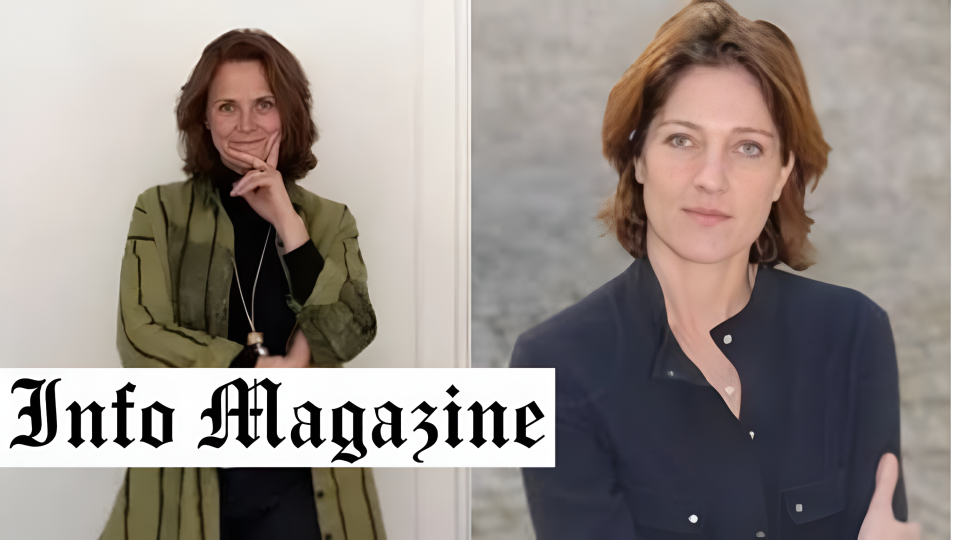
Some people become famous because they spend their lives seeking attention. Others become recognizable because their names happen to intersect with powerful families, major businesses, or well-known public figures. Dorothée Lepère belongs to the second category.
Her name is most often encountered while researching François-Henri Pinault, the French businessman associated with Kering and one of the most recognizable figures in the international luxury industry. That connection explains much of the public interest surrounding Lepère, but it does not explain everything about her. She has also been described as an interior designer, is the mother of two of Pinault’s children, and has maintained a remarkably limited public presence compared with the visibility of the family with which she was once connected.
That combination creates an unusual research problem.
There is enough information to establish the broad outline of Dorothée Lepère’s public identity. There is also enough repetition online to create the illusion that considerably more is known about her than actually is. A specific birth date may appear on dozens of pages, for example, but repetition is not the same thing as independent confirmation. Similarly, descriptions of her career sometimes become more detailed as they move from one biography website to another, even when the underlying evidence does not become stronger.
The most useful way to understand Dorothée Lepère, therefore, is not to construct an artificially complete life story. It is to examine what her name genuinely represents, how her public identity developed, what can reasonably be established, and where responsible research has to stop.
Topic Snapshot
| Fact | Details |
|---|---|
| Name | Dorothée Lepère |
| Category | Private French public figure |
| Profession | Commonly identified in public reporting as an interior designer |
| Nationality | French |
| Public association | Former wife of businessman François-Henri Pinault |
| Marriage | Married François-Henri Pinault in 1996; the marriage ended in 2004 |
| Children | Two children with François-Henri Pinault, François and Mathilde Pinault |
| Geographic context | France, particularly the Parisian context associated with her public profile |
| Public profile | Limited and deliberately private |
| Business connection | Her former marriage connects her biography to the wider Pinault family and luxury-business world |
| Nasdaq relationship | No direct personal relationship with Nasdaq is established |
| Broader market connection | Indirectly connected to the business world through François-Henri Pinault and the Pinault/Kering corporate history |
| Official website | No verified official personal website should be assumed |
What exactly are people looking for when they search for Dorothée Lepère?
The search for Dorothée Lepère is rarely just a search for a name.
People encountering the name usually arrive from another subject. They may have been reading about François-Henri Pinault, looking into the early family history of the Pinault children, researching the background of Mathilde Pinault, or trying to understand the personal history that preceded Pinault’s later marriage to Salma Hayek.
That distinction matters because it explains why information about Lepère is often presented through someone else’s biography.
In other words, the public record surrounding Dorothée Lepère is largely relational. Her name becomes visible because of the people and institutions around her rather than because she has maintained a large media operation of her own.
This is fundamentally different from researching a conventional celebrity or corporate executive. An actor may have interviews, film credits, press appearances, official social-media accounts and agency biographies. A listed-company executive may have investor-relations pages, regulatory disclosures, earnings calls and corporate profiles.
Lepère has none of that scale of documentation.
The result is a peculiar mixture of recognizable facts and large areas of silence.
Her marriage to François-Henri Pinault is one of the clearest parts of the story. Public biographies identify the couple as having married in 1996 and divorced in 2004. They have two children together, François and Mathilde.
Her professional identity is also commonly described as interior design or interior architecture. That gives her an identity independent of the Pinault family, but the public documentation surrounding that career is much thinner than one might expect from the detailed professional biographies sometimes published online.
That gap is important.
A careful reader should not confuse a basic professional description with a complete professional history.
The Pinault connection explains the visibility — but not the whole person
To understand why Dorothée Lepère attracts attention, it is necessary to understand the scale of the family connection without turning her story into another biography of François-Henri Pinault.
François-Henri Pinault became one of the central figures in the transformation of his family’s business interests into a major international luxury group. His professional identity is now closely associated with Kering and with the broader world of luxury fashion, brands, investment and corporate management.
That makes his family history unusually interesting to the public.
François-Henri Pinault was married to Dorothée Lepère from 1996 until 2004. They had two children together.
The dates are more useful than many of the dramatic descriptions that have grown around them. The marriage occurred before Pinault became the globally recognizable corporate figure that he is today, while its end came before the later chapter of his personal life became internationally prominent.
This chronological context is often overlooked.
Lepère was not simply connected to a finished luxury empire. Her marriage belonged to an earlier period in Pinault’s life, before the present-day structure of his business and public identity had fully developed.
That makes her place in the story historically relevant, even though she herself has not maintained a highly visible public role.
For readers wanting background on the Pinault family and François-Henri Pinault’s business history, the Wikipedia reference for François-Henri Pinault can be useful as a starting point for general context. It should be treated as background material rather than as a substitute for primary documentation.
A private person attached to a very public family
There is an important difference between being a public figure and being publicly discussed.
Dorothée Lepère is discussed because her name is connected to a prominent family. That does not mean she has chosen the level of public exposure associated with that family.
This distinction becomes particularly important in the age of social media.
Modern celebrity culture often turns family relationships into public brands. A famous person’s spouse, children, parents and former partners can all develop independent audiences. Social media makes this process even faster because private moments can become searchable, shareable and permanently archived.
Lepère’s public identity appears to have developed differently.
She is recognizable without having a correspondingly large public media presence. There is no need to assume that this reflects a particular personal philosophy. It may simply mean that she has not pursued the kind of publicity that has become normal for people associated with major celebrity and business families.
The absence of information is therefore itself informative, but only in a limited sense.
It tells us that her publicly documented life is narrow.
It does not tell us what she privately believes, how she spends her days, what her personality is like, or what her current priorities are.
Those distinctions are easy to lose when writing about a private person.
Her professional identity: interior design, with an unusually thin public record
One of the most persistent descriptions of Dorothée Lepère is that she is an interior designer.
That description is important because it prevents her story from being reduced entirely to the phrase “François-Henri Pinault’s former wife.”
At the same time, readers should be careful about what the description does and does not establish.
Calling someone an interior designer establishes a professional identity. It does not automatically establish the name of a design company, a list of prestigious clients, a portfolio of published interiors, formal qualifications, awards, or a particular design philosophy.
Those details require separate evidence.
This is where many online biographies become unreliable. A short description such as “interior designer” can gradually become an elaborate professional narrative. One page adds a supposed company. Another adds a founding year. Another describes a signature aesthetic. Eventually, repeated details can look like an established professional biography even when the original evidence is difficult to identify.
That is precisely why a research-oriented account should remain conservative.
The broad professional description can be acknowledged. The undocumented details should not be transformed into facts merely because they sound plausible.
Why the missing portfolio matters
Interior design is a visual profession.
For a highly documented designer, professional evidence normally includes projects, publications, exhibitions, clients, design firms, interviews, awards or other identifiable work.
In Lepère’s case, the public record does not provide the same depth of accessible professional documentation.
That does not prove that she had no successful career.
It simply means that the public cannot responsibly measure that career using information that has not been made available.
This is an important distinction.
A private professional can have a successful career without becoming a public design personality. The absence of a large online portfolio should not be interpreted as evidence of professional failure, just as repeated claims about luxury clients should not be interpreted as evidence of professional prominence without documentation.
The correct position lies between those two assumptions.
The problem with exact dates, ages, and personal details
Few subjects illustrate the difference between online repetition and reliable biography better than Dorothée Lepère’s birth information.
Different online profiles have circulated specific dates and years of birth. Some give a precise day and year, while others provide only a general period.
The temptation is obvious: select the most frequently repeated version and present it as established fact.
That would be poor research practice.
A person’s exact date of birth is a factual claim. If authoritative documentation is not available, it should not be presented with unnecessary certainty.
The same principle applies to childhood.
There are limited reliable public details concerning Lepère’s parents, siblings, early education and upbringing. Yet biographies often feel pressure to fill these gaps because conventional life stories are expected to have an “early life” section.
That pressure can create fiction disguised as biography.
A responsible account should be comfortable saying that certain information is simply not well documented.
In fact, that is more informative than inventing a polished childhood narrative.
What can be established about her family life?
The family connection is considerably clearer than many other aspects of her biography.
Dorothée Lepère and François-Henri Pinault have two children together: François and Mathilde.
This part of her public identity has remained relevant because both children belong to the wider Pinault family story.
Mathilde Pinault has attracted public attention in her own right, particularly through fashion, equestrian interests and her connection to the wider luxury world. François Pinault, meanwhile, belongs to the next generation of the family.
But the existence of public information about her children should not be mistaken for evidence that Lepère herself maintains an equally public lifestyle.
Family visibility is uneven.
One member of a family can be photographed frequently, interviewed regularly and maintain public accounts, while another remains almost completely private.
This is especially relevant when examining famous families. A family tree may be public, but individual experiences within that family are not automatically public property.
Where the Nasdaq question becomes misleading
The inclusion of Nasdaq in discussions about Dorothée Lepère can create an impression that there is a direct financial relationship between her and the American stock market.
There is no established basis for such an interpretation.
Dorothée Lepère is not known as a Nasdaq-listed company, an executive of a Nasdaq-listed company, a stock-market analyst, or a financial institution.
She is an individual.
That means there is no meaningful “Dorothée Lepère Nasdaq stock” to analyze.
The confusion probably comes from the way modern search behavior connects people, companies and financial subjects. Someone researching the Pinault family may eventually encounter Kering, corporate ownership, luxury stocks, European markets or investment discussions. Those subjects can lead readers toward stock-market questions.
But an indirect connection is not the same as a securities-market relationship.
Kering is the relevant corporate bridge
The more logical financial connection runs through the Pinault family’s business history and Kering.
Kering is a major French luxury company with a history rooted in the Pinault business empire. Unlike Dorothée Lepère, Kering is a corporate entity with financial statements, shareholders, market disclosures and a publicly traded equity.
That distinction is essential.
If someone is researching Kering’s valuation, share performance, earnings, dividends or market capitalization, they are researching a company.
If someone is researching Dorothée Lepère’s biography, they are researching a private individual.
Those are two fundamentally different research categories.
The connection between them is historical and relational, not a direct Nasdaq listing relationship.
Nasdaq and European markets are not interchangeable
Another source of confusion is the tendency to treat “stock market” as a single global system.
Nasdaq is a major American exchange and technology-driven market infrastructure. It is particularly associated with U.S. equities and a large number of technology and growth companies.
European listed companies operate within European market structures.
Kering, for example, belongs to the European financial-market environment rather than being a Nasdaq-listed company simply because it is globally important.
This matters when interpreting searches that combine a person’s name with financial terms.
A search containing a personal name, a company name and “Nasdaq” does not automatically establish that the individual has a Nasdaq connection.
The reader has to identify the actual entity being traded.
Is it a person?
A company?
A stock?
An index?
A fund?
A parent company?
A subsidiary?
A holding company?
Without that distinction, financial research can quickly become misleading.
What financial concepts are actually useful here?
Although Dorothée Lepère is not herself a financial-market subject, several financial concepts can help readers understand why her name appears near business-related searches.
Corporate ownership
Ownership explains how control and economic interests can move through families, holding companies and publicly traded corporations.
A family can have substantial influence over a public company without every family member being a shareholder, executive or board member.
Therefore, knowing that someone belongs to a prominent business family does not establish that the person personally owns a specific percentage of a company.
Market capitalization
Market capitalization refers to the market value of a publicly traded company’s outstanding shares.
It is a corporate measurement.
It should not be confused with the personal wealth of an individual associated with the company.
This distinction is particularly important when reading celebrity wealth articles. A company’s value can be enormous while an individual family member’s personal financial position remains undocumented.
Net worth
Net worth is another area where online biography pages frequently become overconfident.
A person’s net worth requires information about assets, liabilities, ownership stakes and other financial interests.
For a private person who does not publish financial statements, an exact figure is generally difficult to establish.
That is why precise net-worth numbers attributed to Dorothée Lepère should not automatically be accepted simply because several websites repeat the same amount.
Public company versus private individual
This is perhaps the most important concept of all.
Public companies have disclosure obligations.
Private individuals generally do not.
A listed company can be analyzed through financial reports and market data. A private individual cannot be treated as though the same level of information is publicly available.
This difference should guide every serious attempt to understand Lepère’s financial circumstances.
What information should readers avoid assuming?
Several assumptions deserve particular caution.
First, being married to a wealthy businessman does not automatically reveal the financial settlement from a divorce.
Second, being associated with the Pinault family does not establish personal ownership of Kering or any other specific company.
Third, a person’s reported profession does not establish the scale of their income.
Fourth, a lack of public information does not prove that the person has no business activities.
Fifth, repeated claims about assets, properties or net worth are not equivalent to verified financial records.
Sixth, photographs circulating online are not automatically proof of identity, date or context.
These principles are especially important for private people whose lives have become interesting to the public primarily because of a famous relationship.
Why privacy changes the way this story should be written
There is a tendency to think that a person connected to a billionaire family automatically becomes fair game for unlimited speculation.
That is not a sound approach.
Public interest and public evidence are different things.
Dorothée Lepère’s marriage is part of the historical record surrounding François-Henri Pinault. Her children are publicly known. Her professional description has appeared in public reporting.
But that does not mean every detail of her private life is available for reconstruction.
A useful biography should therefore avoid turning uncertainty into drama.
There is nothing inherently incomplete about a life that is not extensively documented.
In fact, Lepère’s limited public footprint is one of the defining characteristics of the subject.
The difference between “known,” “reported,” and “assumed”
A strong way to research Dorothée Lepère is to divide information into three categories.
Known refers to information supported consistently by reliable public documentation.
Reported refers to information that has appeared in credible public accounts but may not provide enough detail for stronger conclusions.
Assumed refers to information that appears plausible but lacks sufficient evidence.
This framework is particularly useful for personal biographies.
For example, her former marriage to François-Henri Pinault belongs to the strongest category.
Her description as an interior designer is also part of the established public picture, although the details of her professional career are less extensively documented.
An exact birth date, detailed educational history, precise personal wealth or a supposed list of luxury clients may belong to the weaker categories unless stronger documentation becomes available.
The distinction may seem minor, but it dramatically improves the quality of research.
Why the story remains interesting even without sensational details
A biography does not need dramatic revelations to be worthwhile.
Dorothée Lepère is interesting precisely because her public story sits at the intersection of privacy, family, wealth and professional identity.
She was married to a man whose career became deeply connected with one of the world’s most important luxury groups.
Yet she did not become equally prominent.
She has been described professionally as a designer, but the public has access to far less information about her career than about the business empire surrounding her former husband.
She is the mother of two members of a globally recognized business family, yet she herself has largely remained outside the celebrity machinery surrounding that family.
That contrast raises a broader question about how people are remembered.
Does a person’s importance come from what they personally accomplish, or from the famous people with whom they are connected?
In Lepère’s case, the internet often answers the question for the reader by putting the Pinault relationship first.
A more balanced reading allows the relationship to remain important without allowing it to consume her entire identity.
A useful way to read the wider story
Readers interested in public figures connected with business families can also benefit from broader cultural and business background rather than relying only on personal-life biographies. A general resource such as InfoMagazine can provide contextual reading across business, lifestyle and public-interest topics.
The important point is to keep context separate from identity.
Knowing something about Kering tells us about the business environment surrounding François-Henri Pinault.
Knowing something about François-Henri Pinault tells us why Lepère became publicly recognizable.
Neither automatically tells us everything about Lepère herself.
That logical separation is essential.
What the public record cannot tell us
There are several questions readers may want answered that currently cannot responsibly be answered with precision.
What is Dorothée Lepère’s exact current occupation?
What is her present income?
What is her personal net worth?
Where exactly does she live?
What properties does she own?
What was the precise financial arrangement surrounding her divorce?
What are her current business interests?
What is her exact daily life like?
Unless these details are directly documented by credible sources or disclosed by Lepère herself, they remain private or uncertain.
A good article should not manufacture certainty simply because the reader wants a complete answer.
That is particularly important with financial information.
An exact number is attractive because it looks authoritative. But a wrong exact number is less useful than an honest statement that the figure cannot be established.
What readers should check before making financial conclusions
If a reader encounters a claim about Dorothée Lepère and money, several questions can quickly reveal whether the claim deserves confidence.
Who originally reported the figure?
If ten websites repeat the same amount but all appear to be repeating one another, the number does not have ten independent confirmations.
Is the information about her or about the Pinault family?
Family wealth is not automatically individual wealth.
Is the number an estimate or a documented figure?
These are not interchangeable.
Is there a primary source?
A corporate filing, official business record or direct statement is fundamentally different from an unsourced biography.
Does the date matter?
Financial circumstances can change. A figure from several years ago cannot automatically be treated as current.
Is a public company being confused with a private person?
This is especially important when Nasdaq, stock prices or market capitalization appear in the same search.
These checks are simple, but they prevent many of the most common errors in celebrity-business research.
The bigger lesson behind Dorothée Lepère
The most interesting aspect of Dorothée Lepère may not be a hidden fortune, a dramatic relationship or an undiscovered business empire.
It may be the way public information works.
A person’s name can become highly searchable without that person becoming highly documented.
That creates an unusual environment in which the gaps themselves become filled by speculation.
The more famous the associated family becomes, the greater the pressure to complete the story.
But biography is not a puzzle that has to be completed at any cost.
Sometimes the responsible answer is that the evidence ends.
In Lepère’s case, the broad outline is clear enough: she is a French woman publicly described as an interior designer, she was married to François-Henri Pinault between 1996 and 2004, and they have two children together. Her name remains connected to the Pinault family because of that history.
Beyond that framework, much of the detail becomes progressively less certain.
Recognizing that boundary does not make the story less interesting.
It makes the story more honest.
What Readers Should Take Away
Dorothée Lepère is best understood as a private French figure whose public identity has been shaped by three overlapping elements: her reported work in interior design, her former marriage to François-Henri Pinault, and her position as the mother of two of his children.
The Pinault connection explains why her name appears in discussions surrounding luxury business, family wealth and international fashion. It does not, however, turn Lepère herself into a financial-market entity.
There is no sound basis for treating “Dorothée Lepère Nasdaq” as though it were the name of a listed company or investment instrument. Nasdaq is relevant to listed securities; Lepère is a private individual.
The more meaningful financial connection lies further away, through the corporate history of the Pinault family and Kering. Even there, readers should maintain the distinction between an individual’s personal finances, a family’s wealth, and the market value of a publicly traded corporation.
Perhaps the most important lesson is methodological.
When researching a private person connected to a famous family, readers should resist the temptation to fill every blank. A repeated claim is not necessarily a verified fact. A plausible detail is not automatically a documented detail. A family’s wealth is not automatically an individual’s wealth. And a person’s association with a business leader does not make that person an executive, shareholder or investor in every company connected to that family.
Dorothée Lepère’s story is therefore less about uncovering a sensational secret and more about understanding the boundary between public knowledge and private life.
That boundary is worth respecting.
It also produces a more accurate portrait.
Rather than presenting her as merely “François-Henri Pinault’s ex-wife,” or inventing an elaborate career narrative around incomplete evidence, the available record supports a simpler and more interesting picture: a French designer whose life became publicly relevant through an influential marriage, who shares two children with one of France’s best-known business figures, and who has remained considerably less visible than the world around her.
In a culture where visibility is often mistaken for importance, that distinction matters.
FAQs About Dorothée Lepère
1. Who is Dorothée Lepère?
Dorothée Lepère is a French woman commonly described in public reporting as an interior designer. She is also known for having been married to French businessman François-Henri Pinault from 1996 to 2004. The couple have two children together.
2. Why is Dorothée Lepère famous?
Most public interest in Lepère comes from her former marriage to François-Henri Pinault and her connection to the Pinault family. Her own professional identity as an interior designer is also part of the public record, although comparatively little detailed information about her career is available.
3. Is Dorothée Lepère connected to Kering?
Her connection to Kering is indirect and primarily historical through François-Henri Pinault and the Pinault family. She should not be described as a Kering executive or representative without specific evidence supporting such a role.
4. Does Dorothée Lepère have a Nasdaq stock?
No. Dorothée Lepère is a person, not a publicly traded company or stock. Searches combining her name with Nasdaq should not be interpreted as evidence that she personally has a Nasdaq listing.
5. How many children does Dorothée Lepère have?
She and François-Henri Pinault have two children together, François and Mathilde Pinault.
6. Is Dorothée Lepère still married to François-Henri Pinault?
No. Their marriage lasted from 1996 until 2004. Pinault later married actress and producer Salma Hayek.
7. What is Dorothée Lepère’s net worth?
There is no sufficiently reliable public basis for stating an exact personal net-worth figure for Dorothée Lepère. Online estimates should therefore be treated cautiously, particularly when they provide precise amounts without documented financial evidence.
I kept the financial/Nasdaq angle factual rather than forcing a connection that isn’t established, and avoided unsupported claims about her wealth, exact birth date, education, clients, or private life.
For More Visits: Infomagazine
