
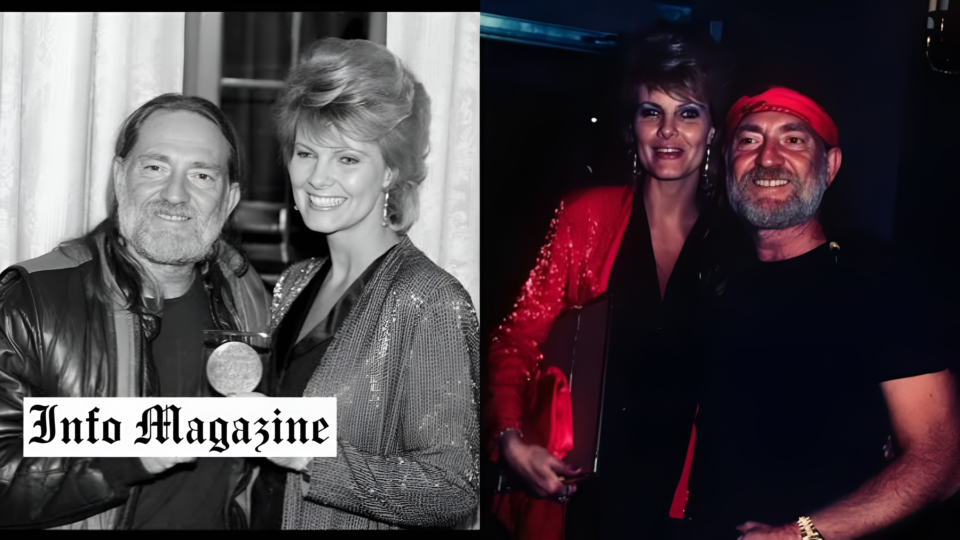
Connie Koepke is one of those names that appears at the edge of a much larger American story. For decades, most references to her have begun with Willie Nelson, the Texas-born songwriter whose career became inseparable from the history of modern country music. Yet Koepke’s own story is more interesting when it is allowed to stand on its own.
She was not a country singer trying to compete for attention beside Nelson. She worked in film production, including a notable role on the 1984 documentary Streetwise, and later remained connected to documentary filmmaking. She also became a mother, a former spouse, and a participant in a complicated chapter of Nelson’s personal life that has been revisited repeatedly through biographies and documentaries.
What makes Connie Koepke particularly intriguing is the contrast between the amount of attention surrounding her name and the relatively little information she has chosen to place in the public arena. Her relationship with Willie Nelson made her famous by association, but her professional life suggests a person whose interests extended beyond celebrity.
That distinction matters. To understand Connie Koepke, it is necessary to look beyond the familiar headline about being Willie Nelson’s former wife and examine the quieter details: her connection to filmmaking, her daughters, the circumstances that brought her into the public eye, and the life she appears to have built away from the constant demands of celebrity culture.
| Fact | Details |
|---|---|
| Full Name | Connie Koepke; also credited as Connie Nelson and Connie Koepke Nelson |
| Date of Birth | June 6; year is not consistently established in reliable public records |
| Place of Birth | Houston, Texas, United States |
| Nationality | American |
| Profession | Film producer, documentary producer |
| Known For | Her marriage to Willie Nelson and her work connected with documentary filmmaking |
| Years Active | At least 1984–2021 in publicly documented film-production credits |
| Net Worth | No confirmed public record; frequently reported estimates should not be treated as verified |
| Marital Status | Divorced |
| Spouse | Willie Nelson, married in 1971; divorced in 1988 |
| Children | Paula Carlene Nelson and Amy Lee Nelson |
| Notable Works / Achievements | Executive producer of Streetwise (1984); later associated with documentary projects including Without Getting Killed or Caught |
The Name Behind the Famous Story
The public image of Connie Koepke was largely created by circumstances rather than by a deliberate pursuit of fame.
Her connection with Willie Nelson began during a period when his personal life was already complicated. Nelson was married to singer Shirley Collie when he became involved with Koepke. Their relationship eventually resulted in the birth of their daughter Paula Carlene Nelson in 1969.
That fact became public in an unusually dramatic way. Collie discovered a hospital bill relating to the birth, exposing the relationship and the existence of the child. The episode later became one of the most frequently retold stories about Nelson’s private life.
For Koepke, however, this was not simply a celebrity anecdote. It was the beginning of a relationship and family chapter that would last for years.
Nelson and Koepke married in 1971 after his divorce from Collie. Their family later grew with the birth of their second daughter, Amy Lee Nelson.
The marriage lasted until 1988.
That timeline places Connie Koepke in an important period of Willie Nelson’s career. The 1970s and 1980s transformed Nelson from a respected songwriter into one of the most recognizable figures in American music. Albums such as Shotgun Willie, Red Headed Stranger, and Stardust expanded his audience dramatically, while his unconventional appearance and approach to country music helped turn him into a cultural icon.
Koepke therefore spent years alongside a man whose professional life was becoming increasingly public. But unlike Nelson, she did not make herself the center of that public world.
That difference is one of the most important things to remember when discussing her.
A Life in Houston Before the Spotlight
Information about Connie Koepke’s childhood is considerably thinner than the information available about her former husband.
Public biographical accounts generally place her upbringing in Houston, Texas, and identify her parents as George Koepke and Helen Koepke. Accounts of her family background describe her father as having German roots and her mother as having Hungarian roots.
She attended Galena Park High School in Texas.
Beyond those details, the record becomes considerably less certain. There is no widely documented childhood memoir from Koepke that explains what she wanted to become as a teenager, nor is there a substantial archive detailing her education in the way there is for many entertainers.
That absence is important because it prevents easy storytelling.
It would be tempting to invent a neat narrative in which a young Connie Koepke always dreamed of working in film and eventually followed that ambition into documentary production. The available record does not establish such a straightforward path.
What can be said is that her later professional involvement with filmmaking was real. By the 1980s, she had moved into documentary production and was credited in a significant film.
That career detail changes how her life can be viewed.
She was not simply a person who became recognizable because she married Willie Nelson. She also had an independent professional identity.
How Connie Koepke Entered Willie Nelson’s Story
The relationship between Connie Koepke and Willie Nelson began while Nelson was still married to Shirley Collie.
Their relationship has understandably remained one of the more controversial chapters of Nelson’s personal history. But reducing Koepke to the role of “Willie Nelson’s mistress” leaves out the years that followed.
By the time the relationship became publicly known, Koepke and Nelson were already parents to Paula.
The hospital-bill episode has been repeated so often that it can overshadow the people involved. Behind the famous story was a young family whose circumstances were suddenly exposed to the public.
Nelson and Collie divorced in 1971. That same year, Nelson married Koepke.
Their marriage represented a significant transition. The relationship that had begun privately now became part of Nelson’s public biography.
For Koepke, however, marriage to one of America’s most recognizable musicians brought a level of attention she did not appear to seek. Nelson’s career involved touring, recording, television appearances, acting, interviews, and an expanding circle of famous friends and collaborators.
Koepke remained considerably more private.
This contrast between public fame and private identity became a recurring theme in her life.
Life as Willie Nelson’s Third Wife
Connie Koepke was Willie Nelson’s third wife.
By the time they married, Nelson had already experienced two previous marriages, and his career was undergoing a major transformation.
The 1970s were especially important. Nelson moved away from the conventional Nashville sound and became associated with the emerging outlaw-country movement. His music, long admired by songwriters and musicians, began reaching a much broader audience.
Koepke was therefore married to Nelson during one of the defining periods of his career.
The public could see the musician.
It could hear his records.
It could follow his tours.
But the domestic side of his life was naturally less visible.
Koepke and Nelson raised their daughters during this period, and the family spent time in Texas and Colorado. Their daughter Paula later recalled growing up around the musicians and artists who surrounded her father.
That environment was unusual. Country music was not simply a career in the Nelson household. It was part of the family’s everyday world.
For Connie Koepke, that meant navigating family life alongside a husband whose professional commitments could take him across the country.
The Two Daughters Who Connect Their Stories
The most lasting connection between Connie Koepke and Willie Nelson is arguably not their marriage.
It is their children.
Paula Carlene Nelson
Paula Carlene Nelson was born on October 27, 1969, before her parents married.
She eventually developed her own career as a musician, singer, songwriter, and radio personality. Her connection to her father is therefore not merely biographical. She became a creative professional in her own right.
Paula grew up surrounded by music and spent portions of her childhood traveling with her father. The environment exposed her to an extraordinary collection of musicians and performers.
Her story also demonstrates why Connie Koepke’s place in the Nelson family cannot be separated from the next generation.
Koepke was not simply a former celebrity spouse. She was the mother of one of Nelson’s daughters, a role that continued long after the marriage ended.
Amy Lee Nelson
Koepke and Nelson’s second daughter, Amy Lee Nelson, was born in 1973.
Amy also entered the creative world. She became known as part of Folk Uke, a musical project formed with Cathy Guthrie, daughter of folk singer Arlo Guthrie.
The connection creates an interesting family pattern.
Willie Nelson became one of America’s most famous songwriters.
His daughter Paula became a musician.
His daughter Amy became part of a musical duo.
And the family’s artistic identity continued into another generation.
For Connie Koepke, motherhood therefore became a major part of a family legacy that extended well beyond her own public relationship with Nelson.
Connie Koepke and Streetwise
One of the most important details in any serious discussion of Connie Koepke is her involvement with the documentary Streetwise.
Released in 1984 and directed by Martin Bell, Streetwise examined the lives of teenagers living on the streets of Seattle. The film became respected within documentary filmmaking and received significant critical attention.
Koepke was credited as an executive producer.
That credit is important because it provides a tangible example of her professional work outside her marriage.
The film’s subject matter was far removed from the glamorous image that might be associated with a celebrity spouse. Streetwise focused on difficult realities involving young people living without stable homes and families.
Its observational approach gave audiences an intimate look at lives that were rarely presented honestly on mainstream television.
Koepke’s association with the film places her within a serious documentary tradition.
Readers looking for broader stories about notable personalities and cultural figures can also explore the feature coverage at InfoMagazine, where entertainment history can be viewed from a wider perspective.
Why Streetwise Matters
Streetwise is more than an item on a filmography.
It provides evidence that Connie Koepke had a professional life connected to filmmaking and production.
That matters because online discussions about her frequently concentrate almost entirely on Willie Nelson.
Her work on Streetwise offers another lens.
Instead of viewing her only through a famous marriage, it is possible to see Koepke as someone who participated in a documentary project concerned with vulnerable young people and social reality.
That is a very different kind of public association from the country-music world surrounding Nelson.
It also explains why references to Koepke sometimes identify her as a producer rather than simply a former spouse.
The Film Producer Behind the Private Person
Koepke’s production work appears to have been selective rather than part of a highly publicized Hollywood career.
That distinction is worth making.
She did not become a household-name producer with a long list of blockbuster films. Her publicly documented credits are limited. But limited public credits do not mean that the work itself was insignificant.
Documentary production often operates differently from celebrity entertainment. Producers may contribute to projects without becoming recognizable personalities.
Koepke’s career seems to fit that quieter model.
Her name appears in connection with documentary projects, while much of her personal life remains outside the public record.
That combination makes her unusual among people connected to major entertainers.
There is no long-running social-media presence that dominates her identity. There are no extensive interview archives explaining every stage of her life. There is no large body of autobiographical material.
Instead, her story is reconstructed from scattered professional credits, family references, historical accounts, and the public biography of Willie Nelson.
That is why caution is necessary when discussing her.
Her Later Connection to Documentary Filmmaking
Koepke’s involvement with documentary production did not end with Streetwise.
She was later associated with Without Getting Killed or Caught, a documentary centered on songwriter Guy Clark, Susanna Clark, and Townes Van Zandt. The project was released in 2021 and included Connie Koepke Nelson as an associate producer.
The connection is particularly fitting because the film deals with the Texas songwriting world.
Texas has always been central to Willie Nelson’s identity, and the state’s songwriting culture includes artists whose influence extends far beyond traditional country music.
Koepke’s involvement in such a project suggests that her connection to music-related storytelling was not simply a consequence of her marriage.
She had her own professional relationship with documentary filmmaking.
The distinction is subtle but significant.
A person can become known because of a famous spouse while simultaneously having a career that developed independently. Connie Koepke appears to fit exactly that complicated category.
Her Name Sometimes Appears Differently
Another reason information about Connie Koepke can be confusing is that she has appeared under more than one name.
She is commonly identified as Connie Koepke, but professional databases have also listed her as Connie Nelson or Connie Koepke Nelson.
This is not unusual for someone who was married to Willie Nelson for many years.
It does, however, create challenges for anyone trying to reconstruct her filmography.
A production credit may use one name while a biographical reference uses another.
For that reason, searching only one version of her name can produce an incomplete picture.
The professional name variation also reinforces the fact that her identity cannot be neatly reduced to one label. She has been a daughter, mother, producer, wife, ex-wife, and documentary participant at different points in her life.
Why Connie Koepke Has Remained So Private
Privacy becomes particularly meaningful when someone is connected to a celebrity of Willie Nelson’s scale.
Nelson’s life has been examined from almost every possible angle. His music, marriages, children, financial struggles, activism, acting career, touring history, and friendships have all become part of public discussion.
Connie Koepke could easily have used that visibility to build a more public career.
Instead, the available record suggests a much quieter approach.
That may partly explain why readers searching for Connie Koepke often encounter the same handful of facts repeated across different websites.
There simply is not a large body of first-person material from Koepke herself.
The lack of information should not be treated as an invitation to fill the gaps with speculation.
Sometimes a person’s decision to remain private is itself part of the story.
The End of the Marriage
Willie Nelson and Connie Koepke divorced in 1988.
By then, their marriage had lasted roughly seventeen years and produced two daughters.
The end of the relationship came during another important period in Nelson’s life. He had met Annie D’Angelo while working on the film Stagecoach, and their relationship eventually led to his fourth marriage in 1991.
Nelson later spoke openly about the difficulties he had caused in his relationships.
His reflections have contributed to a broader understanding of his complicated personal history. They also help explain why Connie Koepke continues to appear in discussions of his life decades after their divorce.
But the divorce should not be interpreted as the end of Koepke’s relevance.
She remained the mother of two Nelson children and continued to have a professional identity of her own.
In families connected to long-lasting celebrities, former spouses can remain part of the story even after romantic relationships end.
Koepke is a clear example.
What Happened After Willie Nelson?
This is one of the questions people most often ask when they encounter the name Connie Koepke.
The answer is less dramatic than the circumstances that first made her famous.
Koepke largely maintained a low public profile.
She continued to be associated with filmmaking and documentary projects, but she did not attempt to establish herself as a celebrity personality.
That makes the available information about her later life relatively limited.
It is possible to document professional connections and family relationships. It is much harder to reconstruct her daily life, personal interests, or private circumstances without crossing the line into speculation.
That boundary is important.
A biography should distinguish between what can be established and what merely sounds plausible.
For Connie Koepke, much of the public fascination comes from the parts of her life that intersect with Willie Nelson. But her later years demonstrate that she did not remain permanently defined by that relationship.
Misconceptions About Connie Koepke
Several misconceptions tend to appear when her story is summarized too quickly.
The first is that she was simply a celebrity wife.
Her documented production work contradicts that narrow description.
The second is that she had an extensive Hollywood career.
There is not enough reliable evidence to support that characterization either. She had meaningful production credits, but her public filmography is relatively small.
The third concerns financial claims.
Various websites have published specific estimates for Connie Koepke’s net worth. Those figures are frequently repeated without a clear financial record behind them. There is no dependable public accounting that establishes a precise current net worth.
A responsible profile should therefore distinguish reported estimates from verified information.
The fourth misconception is that her entire life can be understood through her relationship with Willie Nelson.
It cannot.
That relationship is obviously important. It brought her into the public spotlight and connects her to one of the most recognizable figures in American music.
But it does not explain her entire professional identity or her role as the mother of Paula and Amy.
A Link to the Broader Willie Nelson Story
Understanding Connie Koepke also helps illuminate a less polished side of Willie Nelson’s biography.
Nelson’s public image is often associated with freedom, songwriting, family, road life, generosity, and Texas culture.
His private relationships were much more complicated.
The story of Koepke belongs to that complicated side.
The hospital bill that exposed his relationship with her has become a famous anecdote, but its significance goes beyond the shock value. It shows how the private consequences of a celebrity’s choices can eventually become part of public history.
Nelson himself has acknowledged mistakes in his personal life.
That openness has allowed later documentaries and biographies to revisit the relationships with more nuance than a simple scandal narrative can provide.
For readers interested in the wider world around Nelson, this entertainment and culture coverage provides a useful place to explore related subjects without treating every celebrity story as an isolated event.
Connie Koepke in the Documentary Era
There is an interesting symmetry between Koepke’s personal history and her professional work.
Her life became publicly known because of a dramatic family story.
Her professional work, however, involved documentaries—forms of storytelling that often focus on people whose lives contain complexity beneath the surface.
Streetwise examined young people living on the margins of society.
Later documentary work connected her with the history of Texas songwriting.
Both subjects involve people whose lives cannot easily be reduced to a single sentence.
That same principle applies to Koepke.
Calling her Willie Nelson’s third wife is factually correct, but incomplete.
Calling her a documentary producer is also correct, but incomplete.
Calling her the mother of Paula and Amy Nelson adds another important layer.
Only by combining these different parts does a fuller picture emerge.
Her Place in the Nelson Family Legacy
The most enduring part of Connie Koepke’s story may ultimately be her daughters.
Paula and Amy both developed connections to music, continuing a creative tradition associated with their father.
That makes Koepke an important part of the Nelson family tree even though she is no longer married to Willie.
Celebrity families often receive attention because of famous surnames. But family influence is rarely one-directional.
Parents shape children.
Children reinterpret what they inherit.
And sometimes the most important legacy of a relationship is not the relationship itself but the people who came from it.
Koepke’s daughters are evidence of that.
Their careers and creative interests mean that her place in the Nelson story continues through another generation.
Why People Still Search for Connie Koepke
Interest in Connie Koepke has survived because several different stories overlap in her name.
Some people discover her while researching Willie Nelson’s marriages.
Others encounter her while reading about Paula Nelson or Amy Nelson.
Some are interested in Streetwise and its production history.
Others are curious about the woman whose relationship with Nelson became public through the famous hospital-bill incident.
And some simply want to know what happened to her after the marriage ended.
The internet has made these questions easier to ask but not necessarily easier to answer.
There is a tendency for celebrity biographies to recycle the same information until repeated claims begin to look like established facts.
Koepke’s story is a good example of why repetition is not the same thing as confirmation.
The strongest facts are straightforward: she was connected to Willie Nelson, they married in 1971, they had two daughters, they divorced in 1988, and she had documented work in documentary production.
Beyond those facts, caution is necessary.
What Her Story Says About Celebrity
Perhaps the most compelling aspect of Connie Koepke’s life is not the scandal that introduced her to public attention.
It is the way fame can distort a person’s identity.
When someone becomes connected to a celebrity, the celebrity’s name can become the headline through which everything else is interpreted.
For Koepke, Willie Nelson’s fame was enormous.
Her own professional work existed in a completely different register.
Documentary production is often collaborative and behind the scenes. It does not necessarily produce household names.
That makes it easy for Koepke’s professional accomplishments to disappear behind the much louder story of her marriage.
Yet those accomplishments remain part of the historical record.
Her life therefore presents an interesting question: when someone is remembered primarily because of another person, how much of their own story gets lost?
In Connie Koepke’s case, quite a lot.
A More Balanced View of Connie Koepke
The fairest way to understand Connie Koepke is to resist both extremes.
She was neither merely a footnote in Willie Nelson’s biography nor a secretly famous Hollywood producer with a career far larger than the record supports.
She occupied a quieter middle ground.
She was a woman from Texas who became connected to one of America’s most famous musicians, raised two daughters with him, experienced the pressures of a highly public relationship, and maintained a professional connection to documentary filmmaking.
Her life included controversy, but it was not defined entirely by controversy.
Her marriage was important, but it was not her only identity.
Her film work was meaningful, but she did not build a public celebrity career around it.
That balance makes her story more interesting than the familiar headline suggests.
Frequently Asked Questions About Connie Koepke
Who is Connie Koepke?
Connie Koepke is an American former spouse of country music legend Willie Nelson and a film and documentary producer. She became widely known because of her relationship with Nelson, but she also had professional involvement in documentary filmmaking, including the 1984 film Streetwise.
Was Connie Koepke married to Willie Nelson?
Yes. Connie Koepke married Willie Nelson in 1971 after Nelson’s divorce from his second wife, Shirley Collie. Koepke and Nelson remained married until 1988.
How many children did Connie Koepke have with Willie Nelson?
Connie Koepke and Willie Nelson had two daughters: Paula Carlene Nelson and Amy Lee Nelson. Both daughters later developed connections to music and creative work.
What is Connie Koepke known for professionally?
Connie Koepke is associated with documentary and film production. One of her best-known professional credits is as an executive producer of Streetwise, the acclaimed 1984 documentary directed by Martin Bell. She was also later credited as an associate producer on Without Getting Killed or Caught.
What happened between Connie Koepke and Willie Nelson?
Their relationship began while Willie Nelson was still married to Shirley Collie. The relationship became public after the birth of their daughter Paula and the discovery of a hospital bill. Nelson and Koepke later married in 1971 and divorced in 1988.
Where was Connie Koepke born?
Public biographical accounts generally identify Houston, Texas, as Connie Koepke’s birthplace or hometown. Details about her exact birth year are less consistently documented, while June 6 is commonly given as her birthday.
What is Connie Koepke’s net worth?
There is no confirmed public financial record establishing Connie Koepke’s current net worth. Some websites have published estimates, including figures around $500,000, but those numbers should be treated as unverified rather than established financial facts.
Is Connie Koepke still connected to filmmaking?
Her publicly documented career includes later documentary work, including an associate-producer credit on Without Getting Killed or Caught, released in 2021. Beyond documented projects, her current professional activities are not extensively covered in reliable public records.
The Part of the Story That Remains Quiet
Connie Koepke’s story ultimately becomes more interesting when the noise is removed.
There is the famous country singer, the complicated marriage, the hospital bill, the birth of Paula Nelson, the wedding in 1971, the second daughter, and the divorce in 1988. Those events explain why her name entered the public record.
But they do not explain everything.
There is also the producer who worked on Streetwise. There is the mother whose daughters developed their own relationships with music. There is the private person who remained far less visible than the man beside her.
That last point may be the most revealing.
Some people connected to celebrities spend decades trying to preserve their place in the spotlight. Connie Koepke appears to have done something different. Her name remains known because history keeps pulling it back into view, but her life has never been as publicly exposed as Willie Nelson’s.
That makes the surviving record feel less like a conventional celebrity biography and more like a series of windows into different periods of one woman’s life.
Connie Koepke was part of Willie Nelson’s story, undeniably. But she was never only part of it.
Her work in documentary filmmaking, her role as a mother, and her decision to maintain a comparatively private existence all deserve room beside the more dramatic chapters. And perhaps that is why interest in her has lasted: the more people look beyond the famous name beside hers, the more apparent it becomes that the quieter story is worth telling too.
For More Visits: Infomagazine
