
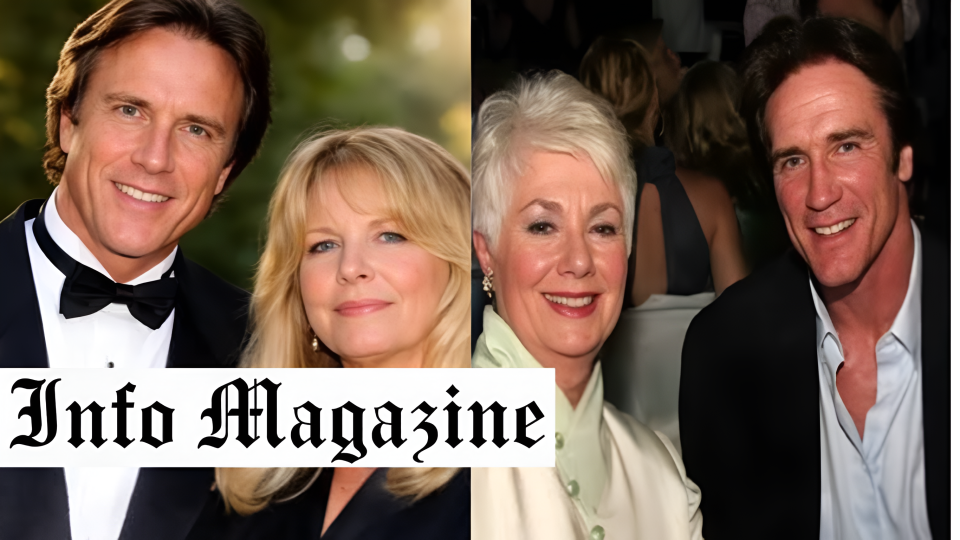
The financial story of Mary Carey Van Dyke is unusual precisely because there is so little reliable financial information attached directly to her name.
She has been connected for decades to one of American entertainment’s most recognizable families. Her husband, Barry Van Dyke, built a long television career, most notably through Diagnosis: Murder, while her father-in-law, Dick Van Dyke, became one of the industry’s most enduring performers. Their four children also developed connections to acting and filmmaking. Yet Mary herself never became a conventional celebrity whose salary, contracts, investments, or business interests were regularly documented.
That creates an important distinction between being part of a wealthy entertainment family and having a publicly measurable personal fortune.
Online searches frequently produce a net-worth number for Mary Carey Van Dyke, but there is no dependable public financial disclosure establishing such a figure. There is no transparent record showing her individual assets, investment portfolio, property holdings, business ownership, salary history, or other information that would allow a responsible calculation. Even estimates attached to other members of the Van Dyke family should not automatically be transferred to Mary.
Her story is therefore better understood as a case study in how family wealth, career longevity, television economics, and privacy can overlap without producing a clear public balance sheet.
That makes Mary Carey Van Dyke interesting from a financial perspective. Her importance does not come from a documented fortune of her own. It comes from examining how a private individual became part of a multigenerational entertainment household, how her husband’s career developed over several decades, and why the financial position of a family can be much easier to understand than the wealth of one private member.
Quick Bio
| FactDetails | |
|---|---|
| Full Name | Mary Carey Van Dyke |
| Born | Exact birth date not reliably confirmed by strong public sources |
| Birthplace | Not reliably established in authoritative public sources |
| Nationality | Not independently confirmed in a sufficiently detailed public biographical record |
| Profession | No independently documented public profession has been firmly established |
| Best Known For | Longtime wife of actor Barry Van Dyke and member of the Van Dyke family |
| Active Since | No independently documented public career timeline |
| Estimated Net Worth | Not publicly disclosed or reliably verifiable |
| Marital Status | Married, according to longstanding public biographical records |
| Spouse | Barry Van Dyke |
| Children | Four: Carey, Shane, Wes, and Taryn Van Dyke |
| Major Achievements | No major individual professional awards or achievements have been reliably documented; her public significance primarily comes from her long-standing family role |
The First Financial Question: What Did Mary Carey Van Dyke Actually Earn?
The most important point to establish at the beginning is also the one most frequently overlooked: Mary Carey Van Dyke does not have a publicly documented individual income history.
There are extensive records concerning Barry Van Dyke’s work as an actor, including his television appearances, film roles and long-running work on Diagnosis: Murder. There are also substantial records concerning Dick Van Dyke’s career. Mary, however, largely exists in public records through her family relationships rather than through a documented professional résumé.
That means it would be irresponsible to construct a fictional earnings history for her.
There is no verified public record showing that Mary received a particular salary from television, earned royalties from a production, owned a specific company, maintained a disclosed investment portfolio, or accumulated a particular amount of real estate.
The absence of those records does not prove that she had no income or assets. It simply means outsiders cannot responsibly calculate them.
That distinction matters particularly when discussing celebrity net worth. A net-worth figure is not the same thing as a person’s fame, household income, or spouse’s wealth.
Net worth is essentially an accounting concept: assets minus liabilities. To calculate it accurately, one needs reliable information about property, investments, cash, businesses, debts and other financial interests. Mary Carey Van Dyke has not publicly provided that information.
Consequently, the most defensible answer to the question “What is Mary Carey Van Dyke’s net worth?” is not a dollar figure.
It is not publicly verified.
Her Financial Story Begins Before Hollywood Success
One of the most interesting elements of Mary Carey Van Dyke’s story is that her relationship with Barry Van Dyke predates his most recognizable professional success.
The Los Angeles Times reported in 1994 that Barry and Mary met when they were both 16. At the time, Barry was working at a local movie theater, taking tickets. The same account said they married seven years later, when Barry was working as an extra, and that they had four children.
People’s later profile of Barry similarly describes Mary as the woman he met in high school and says they married when he was 23. It also confirms their four children.
That timeline changes the way the family’s eventual financial position should be interpreted.
Mary did not simply enter the household after Barry had already become a television star. Their family life developed while Barry was still working toward a stable entertainment career.
From a financial perspective, that means the relationship spans several different economic stages:
- Barry’s early attempts to find consistent work
- Periods of small acting opportunities
- Regular television roles
- The establishment of a recognizable professional identity
- The major success of Diagnosis: Murder
- Later television and film work
The family therefore experienced the transition from uncertain entertainment employment to a much more established television career together.
That is considerably different from trying to calculate Mary’s wealth as though she were an independent celebrity whose career earnings could be totaled from publicly listed projects.
Barry Van Dyke’s Career Provides the Clearest Financial Context
If Mary’s individual finances cannot be reconstructed, Barry’s career provides the strongest available context for understanding the household’s entertainment economy.
Barry grew up as the son of Dick Van Dyke, which gave him an unusual starting point. But the public record also shows that his professional development was gradual rather than instantaneous.
The Los Angeles Times described his early work as including extra roles and small parts before he obtained more significant opportunities. It also reported that he eventually moved into regular television work, including Battlestar Galactica and Airwolf.
This is financially significant because television careers are rarely built around one isolated payday.
A working actor can accumulate economic value through repeated employment, recognizable credits, syndication, made-for-television productions, residual arrangements where applicable, and the increased negotiating power that comes with becoming a dependable television performer.
Barry’s career illustrates that progression.
He was not simply famous because he was Dick Van Dyke’s son. His career developed through a succession of television roles, eventually leading to the role that became most closely associated with him.
The Diagnosis: Murder Breakthrough
The major turning point in Barry Van Dyke’s professional trajectory was his work on Diagnosis: Murder.
The CBS crime series paired Barry with his father, Dick Van Dyke. Barry played Lieutenant Detective Steve Sloan, while Dick played Dr. Mark Sloan. People identifies the program as Barry’s signature role and notes that he appeared in it for eight seasons.
From a financial perspective, the importance of a long-running television role goes beyond the prestige of appearing on screen.
A recurring role can create something that sporadic film appearances often cannot: income continuity.
An actor working steadily on a television series may have a more predictable professional environment than someone constantly searching for the next film role. A long-running series can also increase visibility, strengthen future casting opportunities and establish a character that audiences associate with the actor for years.
That does not mean the public can calculate Barry’s exact earnings from Diagnosis: Murder. Contract terms, episode compensation, residual arrangements and other financial details have not been publicly disclosed in a way that permits a precise calculation.
But the career significance of the series is much easier to establish.
It became the central professional platform associated with Barry Van Dyke.
And because Mary was his wife throughout this period, the show’s success forms an important part of the family’s broader financial history even though it does not establish Mary’s individual net worth.
The Value of Longevity Is Easy to Underestimate
When people search for a celebrity net worth, they often focus on the biggest role.
A more useful financial analysis asks a different question:
How long was the person able to remain economically relevant?
Barry Van Dyke’s career is notable in part because it extended across decades.
His television work included Galactica 1980, The Redd Foxx Show, Airwolf, The A-Team, Magnum, P.I., Murder, She Wrote and other productions before and after Diagnosis: Murder. Later, he worked with Dick Van Dyke again on the Murder 101 television movies.
People likewise describes a career that included numerous television roles before and after Diagnosis: Murder.
The financial lesson is important.
A career does not need to produce one spectacular blockbuster to become economically meaningful. Consistent employment over decades can be financially powerful because it repeatedly creates opportunities to earn.
For a family, this can matter even more than one unusually large contract.
The Van Dyke household’s financial story is therefore better understood as a long-duration entertainment career than as a single jackpot.
Mary’s Role in a Multigenerational Entertainment Family
The Van Dyke family’s financial and professional significance also comes from its unusual continuity across generations.
Dick Van Dyke established the family name in entertainment long before Barry became an adult actor. Barry then created his own television résumé. His children subsequently entered entertainment in different capacities.
Carey Van Dyke, for example, developed credits as an actor and writer. IMDb identifies him as known for projects including Don’t Worry Darling, The Silence and Chernobyl Diaries.
Shane Van Dyke also developed a career as an actor, screenwriter and director.
The family’s involvement with Diagnosis: Murder was especially notable because multiple relatives appeared in the series.
The Los Angeles Times reported during the show’s early years that Barry’s children were becoming involved in the production environment. Carey appeared with Barry and Dick in a two-part episode, while the newspaper discussed the family’s interest in entertainment.
This does not mean Mary herself became a television professional.
It does, however, show that she was part of a household where entertainment was not simply an occupation held by one person. It became an intergenerational environment.
That distinction is useful when evaluating long-term financial influence.
Fame and Earning Power Are Not the Same Thing
Mary Carey Van Dyke is an excellent example of why fame and earning power should not be treated as synonyms.
Her name is searchable because of the Van Dyke family.
Her husband is a recognizable actor.
Her father-in-law is an entertainment icon.
Her children have worked in the industry.
But none of those facts establishes how much money Mary herself earned.
This is a common problem in celebrity financial reporting. A person’s name can become highly visible because of family connections even when the individual has little or no public financial profile.
In Mary’s case, the distinction is particularly important because she appears to have maintained a considerably lower public profile than the performers around her.
That privacy also means that a conventional celebrity wealth model does not work particularly well.
There are no widely documented endorsement deals to add.
There is no established acting résumé from which to estimate cumulative compensation.
There is no publicly disclosed company portfolio.
There is no reliable investment disclosure.
And there is no audited statement of household wealth.
The responsible approach is therefore to acknowledge the uncertainty rather than fill it with a number.
What About the Common Net-Worth Estimates?
Several entertainment websites publish estimated fortunes for Van Dyke family members.
Barry Van Dyke, for example, is sometimes assigned an estimated net worth of around $3 million by celebrity-finance websites.
That figure should be treated as an unofficial estimate, not as a verified financial statement.
More importantly, even if a third-party estimate of Barry’s wealth were accurate, it would not automatically become Mary’s personal net worth.
A married couple can share household expenses and assets, but outsiders cannot determine the legal ownership of every asset simply from the fact of marriage.
There are several reasons why transferring a spouse’s estimated net worth to another person would be misleading:
Household wealth is not automatically individual wealth
A married couple can have jointly owned property, individually owned property, retirement accounts, investments, debts and other assets.
Without documentation, the ownership structure cannot be reconstructed accurately.
Celebrity net-worth websites use estimates
These websites generally do not provide the kind of detailed financial documentation required to independently audit their numbers.
Income and net worth are different
An actor may earn substantial amounts over a career without retaining all of that money. Taxes, agents, managers, expenses, property costs and other obligations affect the amount ultimately accumulated.
Assets can appreciate or decline
A property purchased decades ago may be worth considerably more today, while other investments can move in the opposite direction.
For all these reasons, an exact number for Mary Carey Van Dyke would create an illusion of certainty that the available evidence does not support.
The Economics of a Long Television Career
Although Mary’s personal income remains undocumented, the family’s story illustrates several important economic characteristics of television work.
First, television can provide repeat employment.
Barry’s long association with Diagnosis: Murder is more financially meaningful than simply noting that he appeared in a successful show. The role gave him years of recurring work and maintained his professional visibility.
Second, established television performers can develop opportunities beyond acting.
Barry also received writing and directing credits connected to Diagnosis: Murder, according to entertainment biographies.
Third, recognizable family relationships can generate additional opportunities.
Barry worked with Dick Van Dyke repeatedly, including later Murder 101 productions. People notes that the two continued working together after Diagnosis: Murder.
Fourth, professional longevity can compound.
Every additional decade in an industry can potentially provide more credits, contacts, negotiating experience and opportunities.
None of this proves a particular net worth.
But it helps explain why a decades-long entertainment career can produce meaningful financial stability even without a modern celebrity lifestyle built around endorsements and social media.
What We Can Say About Mary’s Career
The strongest conclusion is surprisingly simple:
Mary Carey Van Dyke does not have a clearly documented public entertainment career.
That statement should not be exaggerated into saying that she never worked.
Those are two different claims.
The public record is simply insufficient to establish a detailed professional history.
Some online biographies describe her as a homemaker or private individual. Others have attempted to assign occupations without providing convincing supporting evidence. Those claims should not automatically be treated as fact.
This is precisely where a good financial profile must resist the temptation to turn missing information into invented information.
If a person’s occupation is not documented, it is better to say so.
If their income is unknown, it is better to say so.
If their assets are unknown, it is better to say so.
And if their net worth cannot be verified, the correct answer is not a made-up number.
Family Wealth Versus Personal Wealth
The Van Dyke family’s history raises a broader financial question: When does family success become relevant to an individual’s financial story?
The answer is that family context can be relevant without being proof of personal wealth.
Mary married Barry before he became best known for Diagnosis: Murder. The couple raised four children: Carey, Shane, Wes and Taryn. The Los Angeles Times documented the family during Barry’s rise into Diagnosis: Murder, while People later confirmed the same four-child family structure.
That means Mary was part of a household whose earning capacity grew as Barry’s career matured.
It is reasonable to say that her household financial environment was connected to Barry’s career.
It is not reasonable to state a precise personal fortune for Mary without evidence.
This difference may seem technical, but it is central to accurate financial journalism.
A Family Built Around More Than One Career
The economic story also becomes more interesting when the next generation is considered.
Carey and Shane pursued entertainment careers of their own. That means the family’s relationship with the industry continued beyond Barry.
This can create a form of professional capital that is difficult to quantify.
Children raised around an entertainment career may gain familiarity with production environments, industry expectations, creative work and professional relationships.
That does not guarantee success.
It does not eliminate competition.
And it does not prove that a family member received special treatment.
The Los Angeles Times itself examined the issue of children of famous performers working in entertainment, including Carey Van Dyke’s early experience appearing with his father and grandfather.
For Mary, the important point is that she was part of the family environment during the years when this multigenerational connection developed.
The Privacy Premium
There is another financial lesson hidden in Mary’s story: privacy can make a person less measurable without making their life less financially significant.
Public entertainers leave trails.
Actors have credits.
Musicians have recordings.
Executives have corporate biographies.
Entrepreneurs may have company registrations and business announcements.
A private spouse can leave very little comparable information.
That does not mean the person’s economic position is insignificant. It means outsiders have fewer tools for estimating it.
Mary Carey Van Dyke appears to fall into this category.
The public can establish her connection to Barry and her children. It can establish the timing of the marriage with reasonable confidence. It can establish her position within the Van Dyke family.
But it cannot build a complete personal balance sheet.
That is not necessarily a weakness in her story.
It may simply reflect a deliberate absence from celebrity culture.
Lifestyle Claims Require the Same Caution
Lifestyle reporting is another area where unsupported assumptions can quickly become misleading.
A person connected to a successful entertainment family may be assumed to own expensive homes, luxury vehicles, large investment portfolios or other high-value assets.
But assumptions are not evidence.
The public record does contain references to the family’s recreational interests. The Los Angeles Times, for example, described Barry and his family as surfers and dirt-bike enthusiasts in its 1994 profile.
That provides some insight into the family’s interests at the time.
It does not provide a basis for estimating their net worth.
Likewise, attending Hollywood events does not establish a luxury lifestyle.
A photograph from an awards ceremony can demonstrate that someone attended an event. It cannot establish their annual spending.
For a financial profile, those distinctions are essential.
Why Mary’s Net Worth Is Particularly Difficult to Calculate
There are at least five major information gaps.
1. No confirmed income history
There is no reliable public record establishing Mary’s salaries, wages or professional earnings.
2. No disclosed investment portfolio
There is no dependable public documentation of stocks, bonds, funds or other investments held individually by Mary.
3. No confirmed business ownership
No major independently documented business interest can responsibly be assigned to her.
4. No verified property portfolio
Publicly available information does not establish a complete list of properties owned individually or jointly by Mary.
5. No financial disclosure
There is no public financial statement that would allow an analyst to calculate her assets and liabilities.
These limitations make a precise net-worth figure impossible to defend.
What Her Story Says About Long-Term Financial Stability
The absence of a personal net-worth number does not make Mary’s story financially uninteresting.
In fact, it makes the analysis more nuanced.
Her life illustrates that financial security can develop inside a household without every member having a separately documented celebrity career.
Barry’s professional longevity is the clearest measurable component of the family’s entertainment history. His work moved from smaller roles and television appearances into recurring series work and eventually Diagnosis: Murder, one of the defining projects of his career.
Mary was present throughout that progression.
The family then continued into another generation of entertainment professionals.
From a long-term perspective, this is less a story about one enormous financial windfall than about durability.
Durability can be one of the most valuable assets in entertainment.
A career that survives changing television formats, changing audiences and changing industry economics can produce opportunities over a much longer period than a short-lived burst of fame.
Where the Money Came From — and Where We Should Stop
If the question is specifically “Where did Mary Carey Van Dyke’s money come from?”, the honest answer is that the public record does not allow a detailed personal answer.
If the question is instead “What financial forces shaped the household in which Mary lived?”, the answer is clearer.
The most significant documented source of entertainment income was Barry Van Dyke’s acting career.
His work included recurring television roles, feature and television films, and his long-running role on Diagnosis: Murder.
His family connection to Dick Van Dyke created professional opportunities and public visibility, but Barry’s career also developed through years of work.
Mary’s financial contribution, if any, cannot be reconstructed from available public records.
Her personal assets cannot be reliably separated from household assets.
And any specific estimate presented as fact would go beyond the evidence.
That is where a responsible financial analysis should stop.
The Long-Term Value of Being Part of the Van Dyke Legacy
The Van Dyke surname has significant cultural value because of Dick Van Dyke’s extraordinary career.
But the more interesting part of Mary’s story is that she did not merely become connected to a famous name. She became part of a family in which the entertainment profession continued across generations.
Barry built his own acting identity.
Carey moved into acting and writing.
Shane developed work across acting, writing and directing.
The family appeared together in television projects, most famously through Diagnosis: Murder.
Mary’s role was largely outside that professional spotlight.
That makes her unusual.
She is closely associated with an entertainment legacy without having a comparably visible entertainment résumé.
The financial implication is that association and ownership must not be confused.
Being part of a successful family can provide stability, opportunity and social capital.
It does not automatically provide a publicly calculable personal fortune.
What Can and Cannot Be Confirmed About Mary Carey Van Dyke’s Wealth?
At this point, the evidence supports several firm conclusions.
Mary Carey Van Dyke is publicly identified as Barry Van Dyke’s wife.
Barry and Mary married in the 1970s, with 1974 supported by People and the Los Angeles Times, although some entertainment databases have used 1975.
They have four children: Carey, Shane, Wes and Taryn.
Barry developed a long entertainment career, including his major role in Diagnosis: Murder.
Several of the couple’s children also entered entertainment.
What cannot be confirmed is equally important.
There is no reliable public figure for Mary’s personal net worth.
There is no sufficiently documented personal salary history.
There is no verified list of individually owned businesses.
There is no public investment statement.
There is no complete property portfolio.
And there is no credible basis for converting Barry’s estimated wealth into Mary’s individual net worth.
For readers researching celebrity finances, this is exactly the kind of distinction that should be made before accepting a number found in a search result.
Why This Kind of Research Matters
Search engines increasingly surface pages that repeat the same celebrity biography claims. Once a number or date appears repeatedly, repetition can make it look authoritative.
But repetition is not verification.
This is particularly important for subjects such as Mary Carey Van Dyke, whose public profile is relatively limited. When original documentation is scarce, secondary websites can begin filling gaps with assumptions.
A useful approach to researching names like this—whether for celebrity profiles and entertainment coverage or financial features—is to separate three categories:
Confirmed information: facts supported by credible reporting or established biographical records.
Reasonable context: information about a spouse, career or family that helps explain the subject’s circumstances but does not prove personal wealth.
Speculation: numerical net-worth claims, unverified occupations, assumed property ownership or other details without reliable documentation.
Mary’s profile becomes much clearer once those categories are separated.
FAQ: Mary Carey Van Dyke and Her Finances
1. What is Mary Carey Van Dyke’s net worth?
Mary Carey Van Dyke’s individual net worth has not been publicly disclosed or reliably verified. Numerical estimates appearing online should therefore be treated as speculative rather than established financial facts.
There is insufficient public information about her personal assets, liabilities, income, investments and property ownership to calculate a defensible figure.
2. How did Mary Carey Van Dyke become financially connected to the Van Dyke family?
Mary’s financial context is primarily connected to her long-standing marriage to Barry Van Dyke. The couple met as teenagers and married during the early stage of Barry’s professional career. The Los Angeles Times reported in 1994 that they had met when both were 16 and married seven years later.
Barry subsequently established a lengthy television career, including Diagnosis: Murder.
That provides household financial context, but it does not establish Mary’s individual net worth.
3. Did Mary Carey Van Dyke have an acting career?
There is no strong public record establishing Mary Carey Van Dyke as a professional actress with a substantial acting career.
Her husband and several of her children have documented entertainment careers, but Mary herself is primarily known publicly through her family relationships.
It would therefore be inappropriate to assign her acting credits or entertainment earnings without reliable evidence.
4. Who is Mary Carey Van Dyke’s husband?
Mary Carey Van Dyke is the longtime wife of actor Barry Van Dyke. People describes Barry as having met Mary in high school and says they married when he was 23.
Barry is the son of entertainer Dick Van Dyke and became particularly well known for playing Steve Sloan on Diagnosis: Murder.
5. How many children does Mary Carey Van Dyke have?
Mary Carey Van Dyke and Barry Van Dyke have four children: Carey, Shane, Wes and Taryn Van Dyke. The Los Angeles Times documented the family in 1994, and later profiles have continued to identify the same four children.
Several of them developed professional connections to entertainment.
6. Did Mary Carey Van Dyke benefit from Barry Van Dyke’s career?
It is reasonable to say that Mary’s household was connected to Barry’s professional earnings because they were married during his long acting career.
However, that does not allow an outside observer to determine what assets belonged to Mary individually, what assets belonged to Barry, or what assets were jointly owned.
The distinction between household finances and individual net worth is essential.
7. What was Barry Van Dyke’s most financially significant career achievement?
From a career perspective, his long-running role as Detective Steve Sloan in Diagnosis: Murder stands out as his most recognizable professional achievement. People describes it as his best-known role and notes that he appeared on the series for eight seasons.
The series also gave Barry a sustained television platform rather than a brief appearance.
8. Are online net-worth estimates for the Van Dyke family reliable?
They should be treated cautiously.
Some entertainment-finance websites publish estimates, including an approximately $3 million estimate for Barry Van Dyke.
However, these figures are not equivalent to audited financial statements. They also should not be transferred from Barry to Mary simply because the two are married.
9. Why is there so little financial information about Mary Carey Van Dyke?
The simplest explanation is that Mary has maintained a much lower public profile than the performers in her family.
Actors generate public records through filmographies, interviews, publicity campaigns and entertainment reporting. A private spouse does not necessarily generate the same documentation.
As a result, Mary’s family history is substantially easier to verify than her individual financial position.
A Perspective on Mary Carey Van Dyke’s Financial Legacy
The most revealing aspect of Mary Carey Van Dyke’s story is not a mysterious fortune waiting to be calculated.
It is the difference between financial visibility and financial reality.
The entertainment industry rewards visibility. Actors need recognizable credits. Television programs need promotion. Publicists create narratives around performers. Celebrity culture turns income, lifestyle and personal relationships into public subjects.
Mary took a different position.
She remained close to one of America’s best-known entertainment families while leaving comparatively little evidence of an independent public career. Her husband developed a durable television career. Her children inherited an environment deeply connected to acting and filmmaking. The family name continued to carry cultural recognition across generations.
Yet Mary’s own financial profile remains private.
That privacy means a precise net-worth number would be artificial.
The stronger financial story is therefore about long-term household stability, career longevity and the economic power of sustained professional work.
Barry Van Dyke’s career shows how a performer can move from small roles into recurring television work and eventually become identified with a major long-running series. His family life developed alongside that progression. The children later created their own entertainment careers, extending the family’s professional legacy.
Mary’s significance lies partly in that continuity.
She represents the quieter side of a Hollywood success story: the family member who is important to the history but whose own financial records are not public.
And that leads to the most useful conclusion about Mary Carey Van Dyke.
Success does not always produce a public balance sheet.
Sometimes it produces decades of stability, family continuity and professional influence without a clearly measurable individual fortune. In Mary’s case, the evidence supports a story of proximity to substantial entertainment success, but it does not justify inventing a personal net-worth figure.
For anyone trying to understand long-term earning power, that distinction is valuable. A celebrity surname can generate attention, but sustained careers generate economic opportunity. A famous family can create visibility, but longevity is what repeatedly converts professional visibility into income. And private individuals can play important roles within successful households without becoming public financial subjects themselves.
Mary Carey Van Dyke’s story is therefore less about asking, “How many millions is she worth?” and more about asking a better question: What does a decades-long connection to a successful entertainment career actually tell us about wealth?
The answer is that it tells us to look beyond the headline number.
Career durability matters.
Household economics matter.
Professional opportunities matter.
And, above all, evidence matters.
In Mary’s case, the evidence tells a story of a private life embedded within a remarkable multigenerational entertainment legacy. It does not provide enough information to turn that story into a precise personal fortune—and acknowledging that limitation is more financially honest than pretending otherwise.
For More Visits: Infomagazine
