
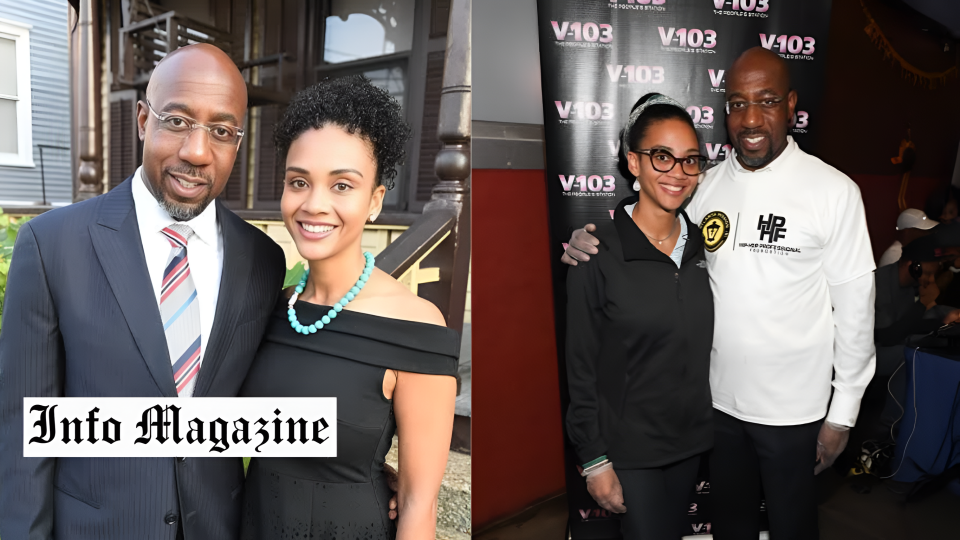
Oulèye Ndoye is a public figure whose story sits at an unusual intersection of global advocacy, academic achievement, public service and political visibility. For many readers, her name first became familiar because of her marriage to Raphael Warnock, the Georgia politician and pastor who later entered the United States Senate. Yet reducing Ndoye to the description of a politician’s former wife misses the larger story.
Long before her personal life attracted widespread attention, Oulèye Ndoye had developed an identity centered on international affairs, human rights, migration, public health and the protection of vulnerable communities. Her academic path took her from Spelman College to the University of Oxford and Columbia University, while her professional interests carried her across several countries and institutions.
That combination explains why searches for Oulèye Ndoye often produce two very different versions of the same person. One is the woman associated with Raphael Warnock and the public scrutiny surrounding their marriage and divorce. The other is a scholar and advocate whose work has focused on questions that are far larger than celebrity culture: migration, women’s rights, trafficking, education and global health.
The more interesting biography is the one that brings those two sides together.
| Fact Details | Information |
|---|---|
| Full Name | Oulèye Ndoye |
| Date of Birth | March 6, 1985 |
| Place of Birth | New York, United States |
| Nationality | American |
| Profession | Global health and human-rights policy professional, advocate and scholar |
| Known For | Human-rights and global-health advocacy; former marriage to Raphael Warnock |
| Years Active | 2007–present |
| Net Worth | No independently verified public figure is established |
| Marital Status | Divorced |
| Spouse | Raphael Warnock, former spouse |
| Children | Two children |
| Notable Works / Achievements | International human-rights advocacy, migration-focused work, women’s and girls’ advocacy, anti-human-trafficking initiatives and public-health research |
Some biographical details frequently repeated online are less firmly documented than others. In particular, estimates of Ndoye’s personal wealth vary widely and are not supported by sufficiently reliable public financial records. For that reason, a precise net-worth figure should not be presented as fact.
The Story Behind Oulèye Ndoye’s Public Identity
The public image of Oulèye Ndoye has been shaped by a tension that follows many people connected to politics: the difference between what attracts public attention and what actually defines a person’s professional life.
Her marriage to Raphael Warnock naturally placed her in the orbit of American political media. Warnock was already a prominent religious leader before becoming a national political figure, and his later election to the U.S. Senate brought an even greater level of attention to his personal history.
But Ndoye’s own professional record developed along a different path.
Her interests were international from an early stage. She became involved with questions involving displaced people, education, women’s empowerment and humanitarian assistance. Those experiences appear to have influenced the direction of her academic and professional life, eventually leading her toward work in public health and human rights.
This is an important distinction when considering her biography. She did not become professionally relevant because of a political marriage. Rather, her political connection made an already established professional identity more visible to a much wider audience.
That difference is easy to overlook when celebrity-style profiles focus primarily on relationships.
An Education Built Around International Affairs
Education is one of the strongest threads running through Oulèye Ndoye’s background.
She attended Spelman College in Atlanta, where she studied International Studies. Her undergraduate experience was not simply an academic exercise. She became involved in student leadership and international initiatives, developing interests that would later become central to her professional life.
Her academic performance was particularly notable. She graduated from Spelman with honors and was inducted into Phi Beta Kappa. During her time at the college, she also served in student leadership and helped develop an international alternative spring-break initiative.
The experience gave her an opportunity to connect education with direct humanitarian engagement.
Rather than treating international affairs as an abstract subject, she began encountering the human consequences of displacement, inequality and limited access to education. Those experiences would become important reference points for the career she later built.
Her education continued after Spelman.
She became a Weidenfeld Scholar at the University of Oxford, where she pursued graduate study related to migration and global development. The subject matter was a natural continuation of the questions that had already interested her: how migration affects communities, how development can be improved and how policy can respond to people living through difficult circumstances.
She later studied at Columbia University, adding another layer to her academic background.
The combination of International Studies, migration and development, and historical scholarship created an unusually broad educational foundation. It allowed her to approach social issues from several directions rather than limiting herself to a single professional discipline.
For readers interested in how public figures build careers away from entertainment, the story of her education is particularly revealing. Her path was shaped less by conventional celebrity ambitions and more by intellectual curiosity and international service.
Readers looking for additional profiles of people whose professional lives cross culture, public affairs and social issues can also explore the broader public figures and culture coverage available through InfoMagazine.
From Student Leadership to International Advocacy
Long before political attention entered the picture, Ndoye was developing practical experience.
One of the defining elements of her early career was an interest in communities affected by displacement and poverty. During her years as a student, she became involved with international projects, including work connected to Uganda and Senegal.
Her experiences in Senegal were particularly significant because they connected education with women’s and girls’ empowerment. She participated in efforts aimed at supporting girls in communities where social and economic circumstances could limit educational opportunities.
This period helped establish a pattern that would appear repeatedly throughout her professional life: identifying vulnerable populations and looking for ways that policy, education and community programs could improve their circumstances.
She later worked with organizations connected to refugee and asylum-seeker issues, including work involving African refugees in Israel. Such experiences exposed her to the complicated realities faced by people moving across borders because of conflict, economic hardship or insecurity.
Migration therefore became more than an academic subject.
It became a human issue.
That distinction helps explain why her later work in public health and human rights developed in the direction it did. Questions about health, migration, gender and human rights frequently overlap. A displaced person may face difficulties accessing medical care. A migrant woman may be vulnerable to exploitation. A child separated from stable educational systems may face long-term consequences.
Ndoye’s professional interests have consistently occupied this space between policy and lived experience.
Why Migration Became an Important Part of Her Work
Migration is often discussed through statistics, political debates and headlines. Ndoye’s career has reflected a more human-centered perspective.
Her international experiences placed her in environments where migration was not an abstract policy issue. She encountered people dealing directly with displacement, uncertainty and limited resources.
This background helps explain her later interest in public health.
Health outcomes are rarely determined only by hospitals or doctors. They are also affected by housing, income, immigration status, education, discrimination and access to social services. People living on the margins of society can face several of these barriers at once.
A professional who works at the intersection of migration and health therefore needs to understand both systems and people.
That broader perspective became increasingly important as Ndoye moved through government, nonprofit and academic settings.
Her career has included work associated with international organizations, advocacy initiatives and policy-oriented programs. She has also been involved in efforts concerning human trafficking, an area where migration, gender inequality and public safety often intersect.
The subject is especially significant because trafficking can remain hidden behind ordinary-looking systems of employment, transportation and migration.
For Ndoye, advocacy has not been limited to broad statements about equality. Her work has involved examining how institutions can respond to vulnerable people more effectively.
A Career That Extends Beyond One Institution
One of the most interesting aspects of Oulèye Ndoye’s professional biography is its variety.
Rather than spending her entire career inside one organization or one narrow field, she has moved through different professional environments. Her experience has included government-related work, nonprofit advocacy and academic settings.
This matters because each environment requires a different approach.
Academic work emphasizes research, teaching and critical analysis. Government work involves policy implementation and institutional structures. Nonprofit organizations often operate closer to communities and focus on direct services or advocacy.
Ndoye’s background across these areas gives her professional identity a hybrid quality.
She is not easily described as only an academic, only an activist or only a policy professional.
Her work has also been associated with initiatives addressing human trafficking and the protection of women and children. Her involvement with organizations supporting people affected by sex trafficking reflects another recurring theme in her career: focusing attention on individuals who may have little influence over the systems affecting them.
That focus has also brought her into conversations about how governments and communities can create stronger responses to exploitation.
The Importance of Women’s and Girls’ Advocacy
Women’s rights and girls’ education have been recurring themes throughout Ndoye’s professional life.
Her early work in Senegal exposed her to communities where girls could face significant social barriers. Later experiences involving migration and vulnerable populations reinforced the connection between gender and inequality.
The issues are interconnected.
When girls lack access to education, their economic opportunities may be reduced. When women lack access to healthcare, the consequences can affect entire families. When migrants lack legal or social protections, women and children may face particular risks.
Ndoye’s career reflects an understanding of those connections.
Her advocacy has therefore extended beyond one individual issue. Instead, it has involved a network of concerns surrounding human rights, education, public health, migration and women’s empowerment.
That breadth is part of what makes her professional profile distinctive.
For readers exploring similar biographies and stories involving women working in public service, advocacy and social policy, the women in public life section offers a wider editorial context.
Public Health Became a New Chapter
In later years, public health became an increasingly important part of Ndoye’s academic and professional identity.
She pursued doctoral study at the Harvard T.H. Chan School of Public Health, adding a research-focused dimension to years of work in human rights and international development.
The move into public health can be viewed as a logical progression rather than a dramatic career change.
Her earlier work had already placed her close to questions involving vulnerable communities. Public health provides tools for understanding how social conditions influence people’s well-being and how systems can respond more effectively.
It also creates opportunities to examine issues using research and evidence.
For someone whose career has crossed multiple countries and institutions, doctoral study represents another stage of that development. Instead of simply advocating for better outcomes, advanced public-health research allows questions to be studied systematically.
This combination of field experience and academic research is one of the strongest aspects of her current professional profile.
Oulèye Ndoye and the Public Attention Around Raphael Warnock
Despite her professional accomplishments, much of the general public became familiar with Oulèye Ndoye because of her relationship with Raphael Warnock.
The couple married in 2016. Their relationship eventually ended in divorce in 2020, following a period of separation.
They have two children together.
The relationship became more widely discussed as Warnock’s political career developed. His position as senior pastor of Ebenezer Baptist Church had already made him a prominent religious figure in Atlanta. His later entry into electoral politics transformed that local prominence into national political visibility.
As a result, Ndoye’s private life became a subject of public curiosity.
This is where the story becomes complicated.
The public tends to organize people into simple categories: politician, spouse, ex-spouse, activist or celebrity. Real lives rarely fit those categories so neatly.
Ndoye’s professional record existed before and alongside her marriage. Yet political coverage naturally increased interest in her personal circumstances.
For background on Warnock’s political and public career, readers can consult the Raphael Warnock Wikipedia page, while remembering that Wikipedia is best used as a starting point for general context rather than as the only authority for sensitive personal claims.
A Marriage That Became Part of the Public Record
Marriage to a public figure can create a peculiar kind of visibility.
A person may not seek political attention personally, yet their family relationships can become relevant to journalists, voters and political commentators. This happened to Ndoye as Warnock’s political profile expanded.
Their marriage was relatively short in comparison with the amount of public interest surrounding it.
The couple’s divorce became especially significant during the period when Warnock was moving into national political life. Media coverage examined aspects of their relationship and subsequent legal disputes, creating a public narrative that was sometimes much more focused on personal conflict than on Ndoye’s professional achievements.
That dynamic illustrates a broader issue in political culture.
The families and former partners of public officials often become part of political storytelling even when their own professional lives have little to do with elections.
Ndoye’s biography is a useful example of why those stories should be approached carefully.
A person’s relationship to a politician can explain why they are in the public eye. It does not necessarily explain who they are.
Motherhood and the Boundary Between Public and Private Life
Ndoye and Warnock have two children.
Their children’s existence has become part of the public record because of the prominence of their parents, but there is an important distinction between acknowledging that fact and treating children as political personalities.
The children are not responsible for their parents’ public careers.
Ndoye’s role as a mother has therefore existed alongside a professional life that has continued to develop in academic and advocacy circles. Her biography illustrates the challenge faced by many people who suddenly find that private family matters attract public attention.
The temptation for media coverage is often to turn every aspect of a public figure’s personal life into a story.
A more useful approach is to focus on what can genuinely be learned from the person’s public work while respecting the boundaries surrounding family members.
That approach is particularly important when discussing Ndoye, because much of the online conversation about her has historically centered on her former marriage rather than her professional record.
Why Net Worth Claims About Oulèye Ndoye Should Be Treated Carefully
Searches for public figures frequently include the phrase “net worth,” and Oulèye Ndoye is no exception.
Various websites have published estimates of her wealth, with figures ranging from relatively modest amounts to several million dollars. The problem is that these estimates are not accompanied by sufficiently transparent financial documentation.
There is no strong public record establishing a definitive personal net worth for Ndoye.
That makes precise dollar figures misleading.
Her education and professional experience demonstrate substantial achievement, but professional achievement cannot automatically be converted into a specific personal fortune.
This is an important distinction in celebrity biography writing.
A person’s occupation, academic credentials and institutional affiliations do not reveal their complete financial situation. Without reliable public records, any exact net-worth claim should be regarded as speculation rather than established fact.
For that reason, the most responsible profile of Oulèye Ndoye avoids presenting an invented number simply because search engines reward the phrase “net worth.”
Readers interested in responsible celebrity and public-figure coverage can find more profiles and explanatory features through InfoMagazine’s biography coverage.
The Difference Between Publicity and Influence
Oulèye Ndoye’s story raises an interesting question: what does it actually mean to be influential?
Celebrity culture often measures influence through television appearances, social-media followers or proximity to famous people.
Ndoye represents a different kind of influence.
Her professional interests have involved institutions, policy, education, research and advocacy. These fields rarely produce the same immediate visibility as entertainment or politics, but their effects can be more structural.
A policy adviser can influence how an organization responds to vulnerable populations.
A researcher can change how a problem is understood.
An advocate can bring attention to people whose experiences are rarely represented in mainstream conversations.
A teacher can influence future professionals.
These forms of influence are less visible but still meaningful.
That may be the most important lens through which to understand Ndoye’s career.
Her Connection to Human Trafficking Advocacy
Human trafficking has been one of the more significant themes associated with Ndoye’s advocacy.
Her work has included efforts related to vulnerable populations and anti-trafficking policy. She has also been connected with organizations working to provide care and support to people affected by sex trafficking.
This area of advocacy requires more than awareness campaigns.
Effective anti-trafficking work can involve identifying victims, improving institutional responses, strengthening prevention programs and helping survivors rebuild their lives.
The subject also overlaps with migration policy, gender equality and public health.
That overlap mirrors Ndoye’s wider career.
Her professional interests have rarely existed in isolation. Migration can intersect with trafficking. Trafficking can intersect with women’s health. Women’s health can intersect with economic inequality. Each issue can reinforce another.
This interconnected approach helps explain why her academic and professional path has crossed so many fields.
Academic Work and the Value of Research
Ndoye’s academic background also adds an important dimension to her public identity.
Her undergraduate studies established a foundation in international affairs. Graduate education expanded that focus into migration and development and historical study. Doctoral work in public health then introduced another layer of research and analysis.
Taken together, the progression suggests a continuing interest in how social systems affect human lives.
The academic side of her work is particularly significant because it separates her professional identity from the political attention surrounding her personal life.
When her name appears in political discussions, it can be easy to overlook the fact that she has spent years building expertise in subjects that have nothing to do with electoral politics.
Her career is therefore better understood as a public-service and research story than as a political-spouse biography.
A Professional Life Spanning Several Countries
International exposure is another defining characteristic of Oulèye Ndoye’s background.
Her experiences have taken her into work involving Africa, Asia, the Middle East, Europe and the United States.
Those experiences are relevant because international work often challenges assumptions that are easy to maintain when viewed from only one country.
Working with displaced communities in one region may reveal similarities with communities facing different circumstances elsewhere. Education programs in Senegal can raise questions that also matter in other developing communities. Refugee issues in Israel can illuminate broader questions about migration policy.
For Ndoye, international experience appears to have reinforced the idea that social problems require context.
There is rarely one solution that works everywhere.
Good policy requires understanding local conditions, cultural expectations and institutional limitations.
That perspective is valuable in global health, where interventions must often be adapted to the realities of individual communities.
Public Appearances and Media Interest
Ndoye has occasionally appeared in media contexts because of both her advocacy and her relationship with Warnock.
Her advocacy has received attention from major American media organizations, while her personal life became part of television and political coverage during and after her marriage.
The distinction between those two types of exposure is important.
One comes from professional activity.
The other comes from personal association.
The second may generate more immediate public curiosity, but the first tells us more about her long-term contribution.
Her public profile therefore cannot be fully understood through political coverage alone.
The more complete picture is someone whose work had already taken place across academic, humanitarian and policy environments before political circumstances made her personal story widely searchable.
Lesser-Known Side of Her Story
One of the less frequently emphasized aspects of Oulèye Ndoye’s biography is her early involvement in student leadership.
At Spelman College, she was not simply an academic participant. She became involved in campus leadership and helped create initiatives connecting students with international communities.
That experience is revealing because leadership was present in her life before her professional career became established.
Another less visible aspect is the geographic breadth of her work.
People often associate her primarily with Atlanta because of her connection to Warnock. Yet her professional experiences have extended far beyond Georgia.
Her story includes work and study connected to multiple continents, which makes the Atlanta-centered version of her biography incomplete.
There is also a less obvious continuity between her early academic interests and her later public-health work. At first glance, International Studies, migration, history and public health might appear to be separate areas.
In reality, they can be understood as different ways of examining the same underlying question:
How do institutions and social conditions shape human lives?
That question runs through much of Ndoye’s professional identity.
Where Oulèye Ndoye’s Story Stands Today
The most current chapter of Ndoye’s professional story is closely connected to public health and academic research.
Her doctoral studies at Harvard represent a significant continuation of the work she began years earlier through international advocacy and humanitarian engagement.
The shift toward advanced research does not mean abandoning advocacy. Instead, it can provide another set of tools for addressing the problems that have concerned her throughout her career.
Public health increasingly recognizes that health outcomes are affected by social conditions.
Migration, gender, poverty, exploitation, education and access to services can all influence health.
That makes Ndoye’s background unusually relevant to contemporary public-health conversations.
Her career has prepared her to look at health not simply as a medical issue, but as part of a larger social system.
What Makes Oulèye Ndoye’s Biography Worth Understanding?
There are countless public figures whose biographies can be reduced to a handful of searchable facts.
Oulèye Ndoye is harder to reduce.
She is an academic.
She is an advocate.
She is a policy professional.
She has worked internationally.
She has studied migration and development.
She has pursued advanced public-health research.
She is a mother.
She is also the former spouse of one of the most recognizable political figures in Georgia.
Each description is accurate, but none tells the complete story.
The reason people continue searching for her is partly political curiosity. Yet the deeper reason her biography remains interesting is that her professional life represents a different route into public influence.
She did not build her public identity around entertainment or elected office.
Instead, her career developed through education, international experience, humanitarian work and advocacy.
That path is less glamorous, but it offers a more substantial story.
Frequently Asked Questions About Oulèye Ndoye
Who is Oulèye Ndoye?
Oulèye Ndoye is an American global-health and human-rights professional whose work has included international development, migration, women’s advocacy, anti-trafficking efforts and public-health research. She is also known publicly as the former wife of U.S. Senator Raphael Warnock.
What is Oulèye Ndoye known for?
She is known both for her professional advocacy work and for her former marriage to Raphael Warnock. Her professional background includes international human-rights work, migration-focused initiatives, women’s and girls’ advocacy and public-health research.
Where did Oulèye Ndoye study?
Ndoye studied International Studies at Spelman College. She later pursued graduate education at the University of Oxford and Columbia University and subsequently pursued doctoral-level public-health studies at Harvard.
Is Oulèye Ndoye married?
No. Oulèye Ndoye and Raphael Warnock married in 2016 and later divorced in 2020.
How many children does Oulèye Ndoye have?
She and Raphael Warnock have two children together.
What does Oulèye Ndoye do professionally?
Her professional background centers on global health, human rights, policy, advocacy and academic research. Her work has included issues involving migration, women, children and human trafficking.
What is Oulèye Ndoye’s net worth?
There is no independently verified public figure that establishes Oulèye Ndoye’s exact net worth. Online estimates vary considerably and should not be treated as confirmed financial information.
Why is Oulèye Ndoye famous?
Her public recognition comes from two main areas: her professional work in human rights and global health and her former marriage to Raphael Warnock, who became a U.S. senator from Georgia.
A Different Way to Look at Her Public Profile
The easiest way to describe Oulèye Ndoye is also the least complete: Raphael Warnock’s former wife.
That description explains why her name became widely recognized, but it does not explain the career that existed before the political spotlight arrived.
Her biography is ultimately about the intersection of education, international experience and public service. From student leadership at Spelman College to international humanitarian work, from migration studies at Oxford to public-health research at Harvard, her career has followed a consistent concern with people whose lives are shaped by larger social systems.
The public may continue to associate her name with politics because relationships with high-profile politicians naturally attract attention. But the more enduring story is found elsewhere.
It is in the communities she has worked with, the subjects she has studied and the questions she has continued to explore.
Oulèye Ndoye’s significance therefore does not depend on being the spouse of a politician or the subject of a political headline. Her professional identity has its own foundation. And as her work in public health and human rights continues to develop, that foundation may ultimately prove more important than the personal circumstances that first brought her name into the wider public conversation.
For More Visits: Infomagazine
